How to Teach Kids to Get Dressed: One Manageable Step at a Time
Choose one small part of dressing, make the clothing easier to use, and practice when the clock is not deciding the outcome.
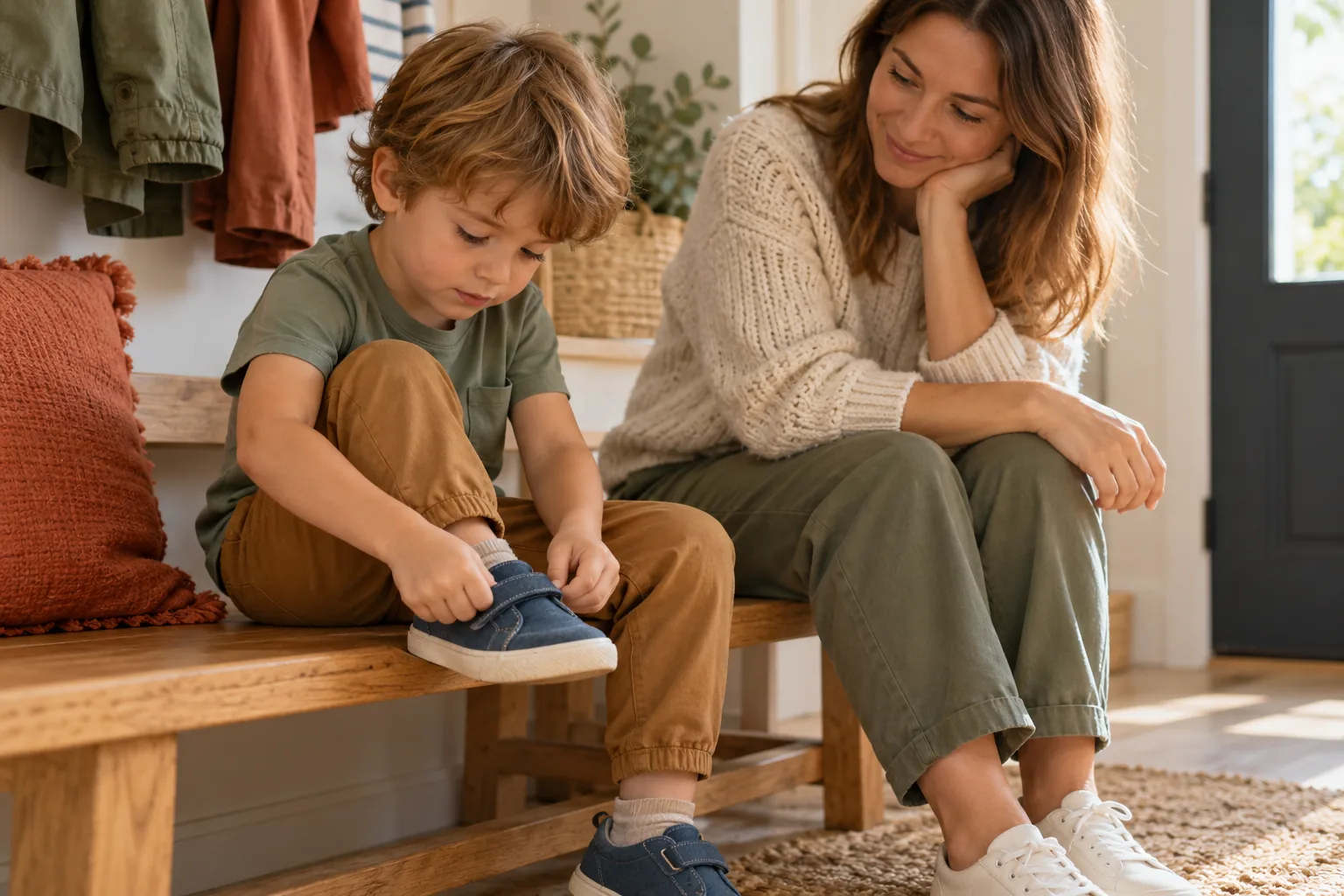
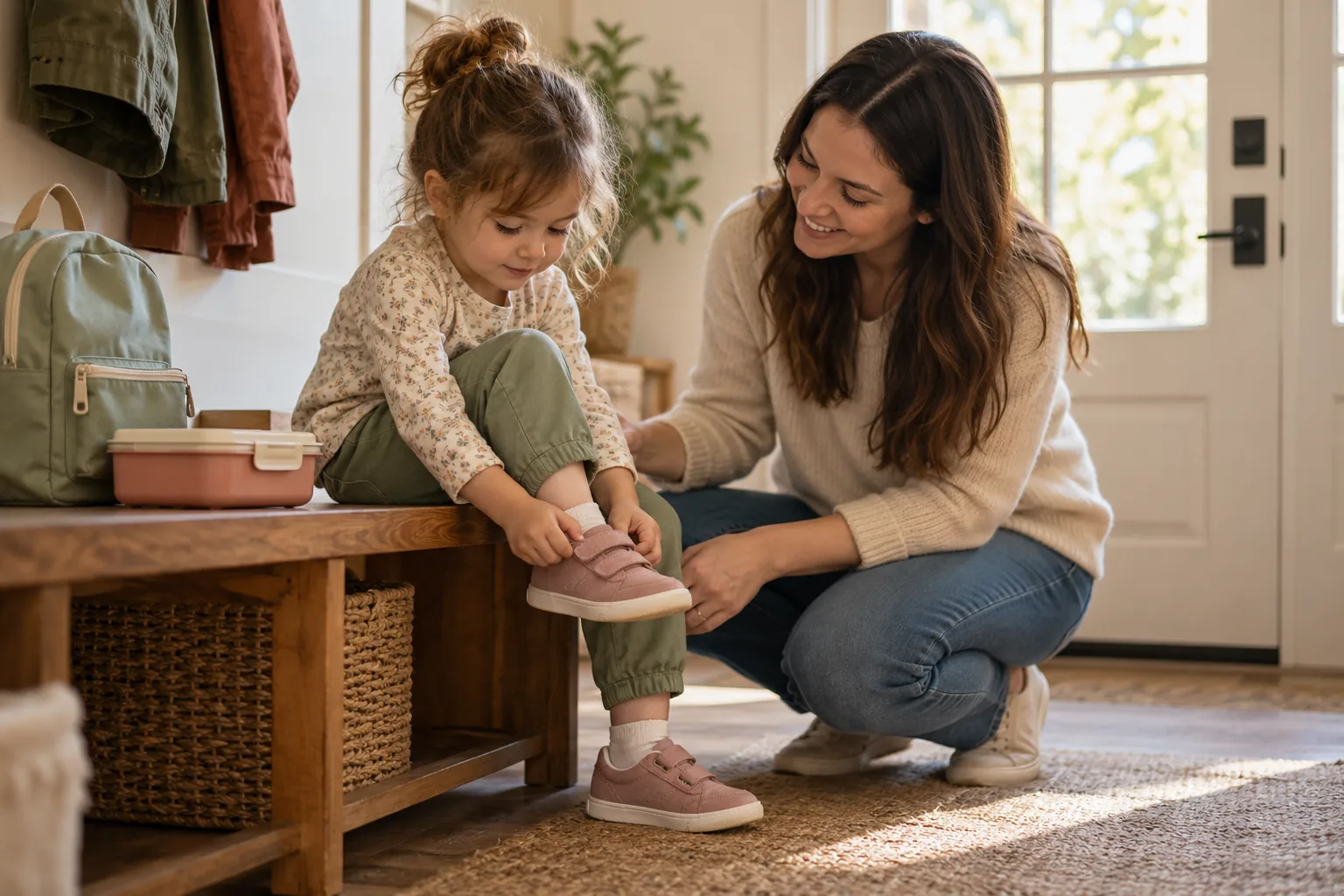
AI-generated editorial image. Fictional scene, not a photographed case study. How we use images
Getting dressed asks a child to organize a sequence, orient clothing, move their body and use two hands together. Instead of expecting the whole outfit at once, choose one achievable action. Continuing to need help is compatible with learning and with taking part in school.
The short answer
Begin with one action the child can attempt comfortably, such as pushing an arm through a sleeve or closing a hook-and-loop strap. Prepare stable seating and easier clothing, demonstrate briefly and allow time. Practice outside the morning rush, then provide the help needed to finish.
- Who this helps
- Families practicing a child’s everyday dressing skills
- Start with
- Choose one comfortable action and keep the remaining help available.
- Use this guide to
- Break a garment into manageable actions without an age deadline.
Start with the task, not an age deadline
The Chesterfield Royal Hospital dressing guide describes dressing as a collection of physical and organizational skills. It also explains a general progression from helping with dressing to managing fastenings. Children follow different timelines; a guide cannot assess an individual child.
Notice where the task becomes difficult. Is the shirt hard to orient, the opening narrow, or the final pull too demanding? Ask what the child wants to do themselves. The aim may be choosing an outfit, communicating discomfort or finishing one closure, rather than completing every action alone.
Make the clothing and position easier
- Offer a comfortable seated position with feet supported when helpful. Avoid practicing while balancing on a bed or climbing furniture.
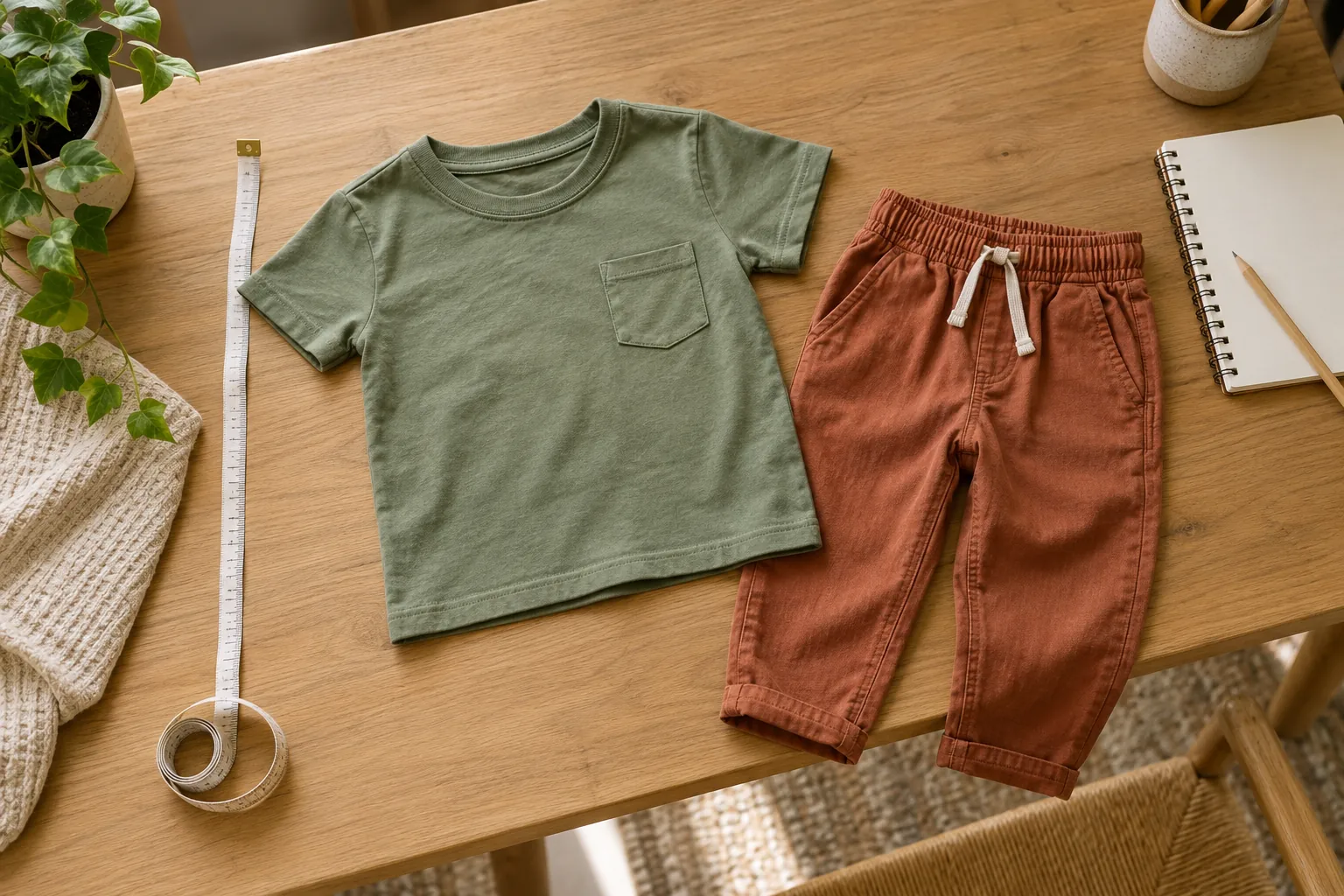
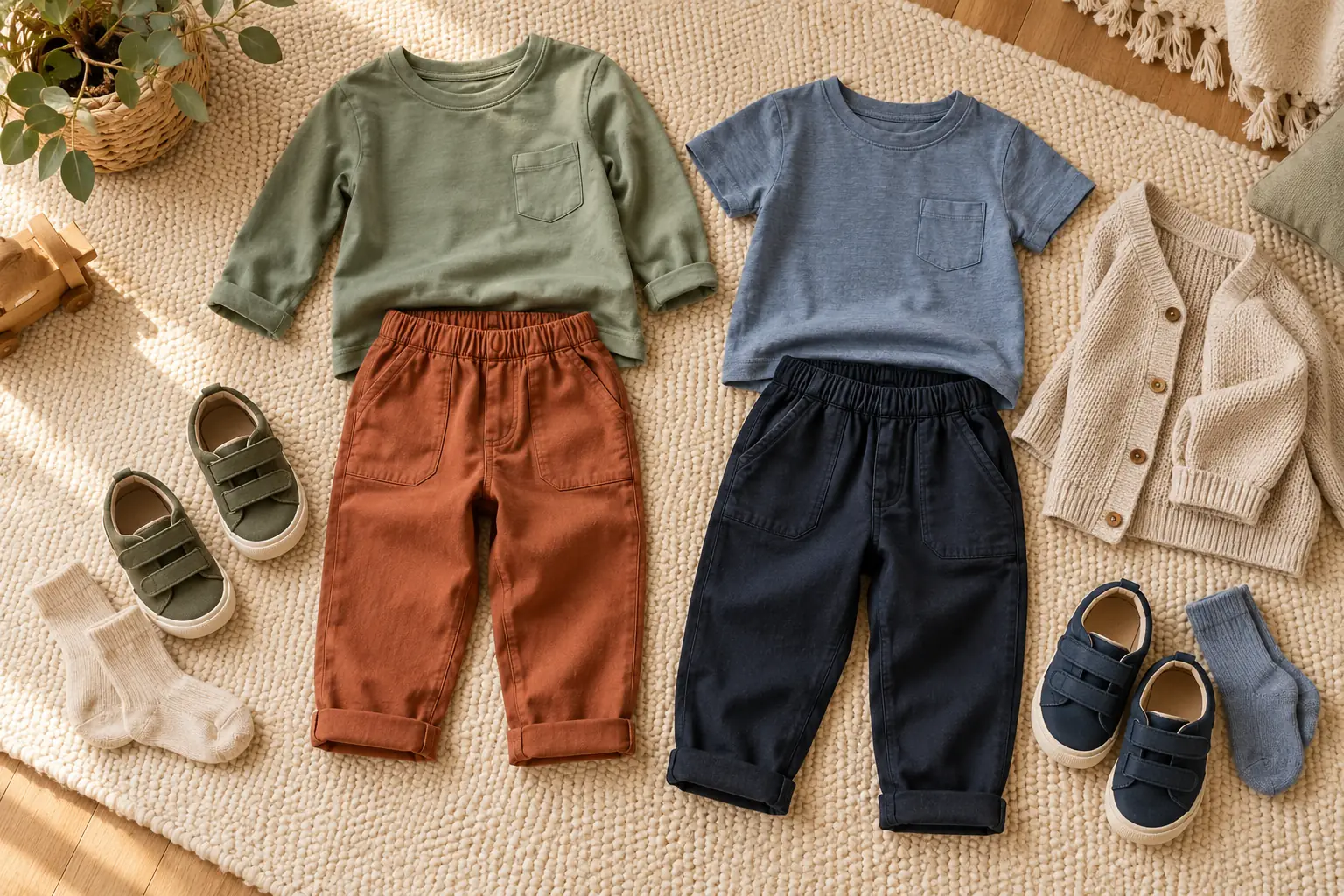
- Start with a familiar item that is easy to move and open. A roomy opening and an elastic waist may remove a barrier.
- Lay clothing in a consistent orientation. Point out a seam, front picture or other cue that already exists on the garment.
- Offer a choice between two suitable items rather than an unrestricted search through the wardrobe.
Break a garment into small actions
| Garment | Possible small action | Adult support to keep |
|---|---|---|
| T-shirt | Push one hand through a sleeve. | Hold the opening and help with orientation. |
| Elastic-waist trousers | Pull the front of the waist up after both feet are through. | Help position the legs and finish the back if needed. |
| Cardigan or coat | Pull a prepared zip upward. | Connect the zip base and steady the garment. |
| Hook-and-loop shoe | Close the open strap. | Help identify the correct shoe and seat the heel. |
| Socks | Pull the top after the foot is placed. | Support the opening and heel positioning. |
These are Kidowear examples, not an assessment or a fixed teaching order. The Gloucestershire Health and Care NHS dressing advice suggests practical preparation such as stable sitting, describing an action and trying easier garments. Use professional advice specific to the child when they need it.
A short practice session
- Choose a calm moment and tell the child exactly what they can try: “I’ll hold the shoe; you can close this strap.”
- Show the action slowly on the garment or on yourself. Avoid adding a long explanation while the child is trying.
- Pause long enough for an attempt. Ask before physically helping and stop a movement that causes pain or distress.
- Describe the action that happened: “You held the tab and pulled it across.” Finish the remaining steps together.
- Keep the same small task for the next comfortable opportunity, or reduce it if it was too hard.
When the morning does not have practice time
Separate learning time from departure time. A useful phrase is: “We have to leave soon, so I will help with the trousers today. You can do the strap.” Finishing a task together is not losing progress. Plan the adult assistance openly rather than using independence as the condition for leaving on time.
Tell the school which closures need assistance and agree how the child can request it. Use the school morning plan to protect enough transition time, and choose school clothing that does not introduce unnecessary obstacles.
Adapt the goal when comfort or movement is the barrier
A different texture, opening, closure, position or communication cue may matter more than more repetition. Ask the child about discomfort without insisting that they tolerate an item to prove a skill. Do not assume a preference identifies a sensory condition. Persistent pain, loss of skills or difficulties that restrict daily participation deserve discussion with the child’s clinician or an occupational therapist.
Keep one brief observation, such as “Can close the shoe strap after the heel is positioned.” It describes the assistance needed without ranking the child against another child.
Frequently asked questions
What age should a child dress independently?
Should I let my child struggle until they finish?
Is it okay to use easier fastenings?
Sources and further reading
Public guidance behind this article. The examples and planning tables are suggestions to adapt, not reported research or tested outcomes.
- Chesterfield Royal Hospital NHS — Getting Dressed
- Gloucestershire Health and Care NHS — children’s occupational therapy and dressing
This guide does not claim product testing or safety certification. Read our editorial policy or suggest a correction.
Reference this page
Cite this guide
MUSK. “How to Teach Kids to Get Dressed: One Manageable Step at a Time.” Kidowear. Updated .
https://kidowear.xyz/blog/teach-kids-to-get-dressedKeep the relevant context with a quotation and link to this article. The planning examples are suggestions to adapt; the linked source list provides the original guidance. Sharing and classroom printing
Written by
MUSK
US-based children’s apparel and family-life writer
MUSK is a US-based contributor with a background in children’s apparel. Articles cover dressing skills, school routines, play, learning and digital life, with practical examples and source links.
This article is general guidance, not medical advice. Every child is different — when in doubt, check with your pediatrician or a licensed professional. See our disclaimer.