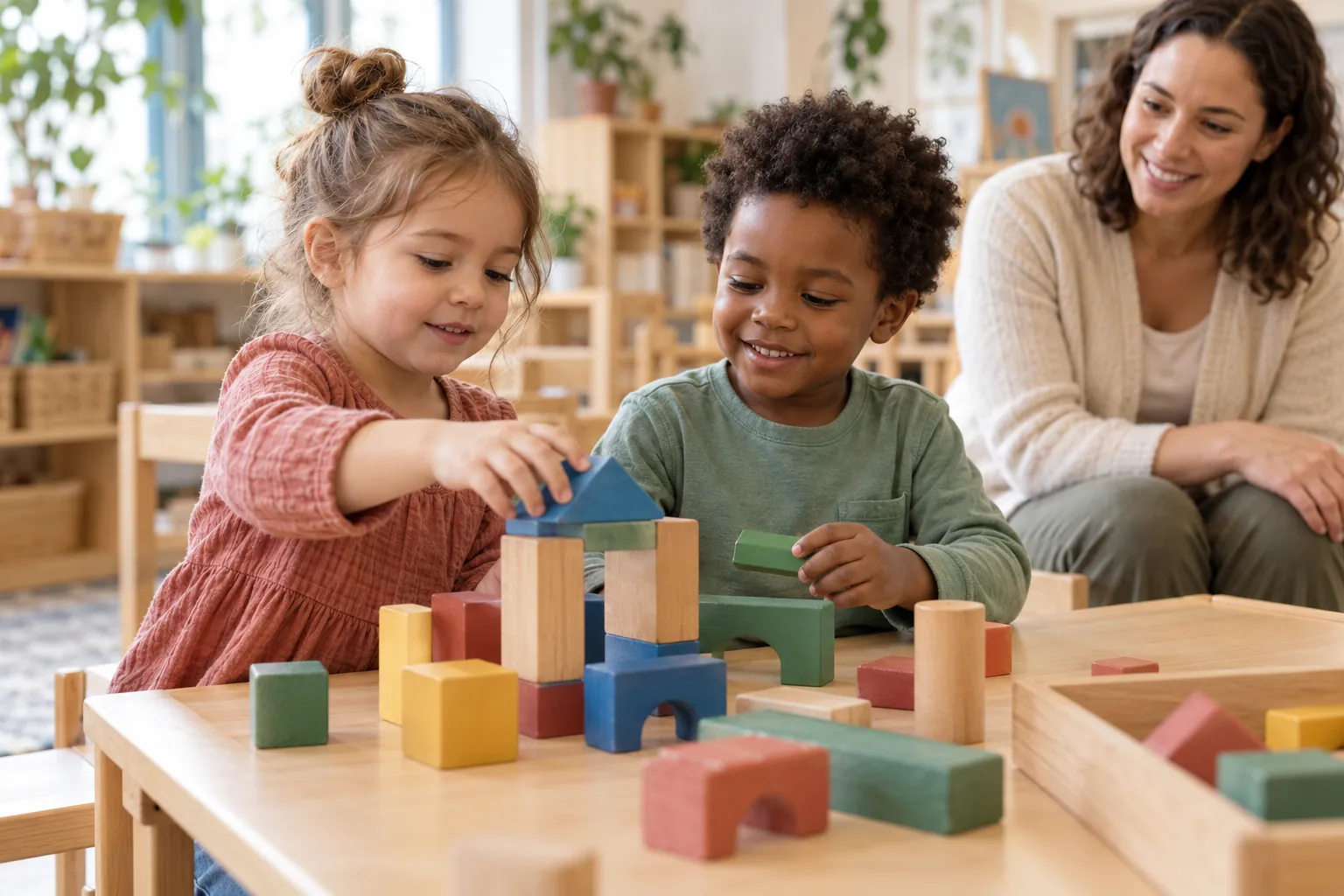
How to Help Your Child Make Friends
Friendship skills can be taught and practiced. Here's how to coach the small social moves, set up low-pressure playdates, and support a shy or struggling child.
By JULIApr 28, 20264 min

Big feelings, strong friendships.
A child who can name a feeling is a child on the way to managing it. This section is about the inner life of childhood — teaching emotional regulation, talking about feelings without lectures, building genuine self-esteem and helping a shy or struggling child make friends. These are the quiet skills that shape how a person handles the rest of their life.
4 articles in this topic

Understanding a feeling, practicing a response, feeling capable, and joining play are related but different skills. Choose a guide for the situation and adapt the words for how your child communicates.
Use short conversation starters without demanding a feeling label or a positive answer.
Try one option while calm and offer support during overwhelm.
Give specific encouragement and real responsibilities with enough assistance.
Plan manageable invitations and recognize when exclusion needs adult action.
Do not judge progress by whether a child stops showing difficult feelings. Notice whether they can access help, communicate needs, and return to activities with support. Free family planners · Sources and limitations
Friendship skills can be taught and practiced. Here's how to coach the small social moves, set up low-pressure playdates, and support a shy or struggling child.
Real self-esteem isn't built on constant praise — it's built on competence, effort, and being loved as you are. Here's how to grow the durable kind of confidence.
Kids who can name what they feel handle it better. Here's how to build emotional vocabulary and respond so your child actually opens up — instead of shutting down.
Self-control isn't something kids are born with — it's taught, mostly through your calm. Here's how co-regulation, naming feelings, and simple tools build it over time.