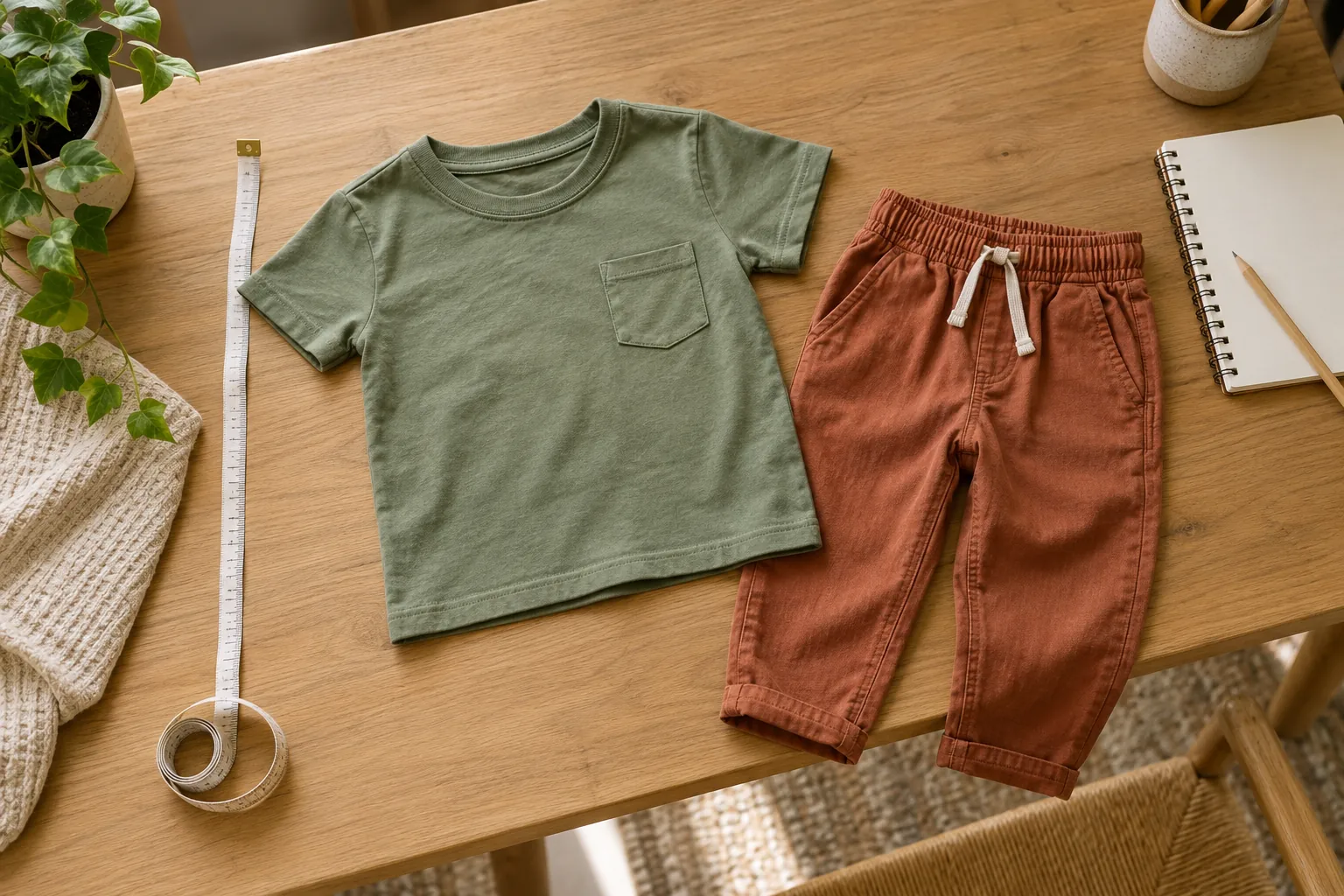
Kids Clothing Size Guide: Measure, Compare and Check the Fit
Start with measurements and the specific garment, then check sitting, reaching and everyday movement. An age label is only a place to begin.
By JULIOct 19, 20265 min
Clothes that work for the day.
Start with what a child needs to do in their clothes: sit, reach, play, change and ask for help. These guides connect our contributors’ children’s apparel background with measurement worksheets, usable clothing checks and practical routines. They distinguish household examples from product specifications and official safety guidance; they do not rank brands or invent universal size charts.
4 articles in this topic
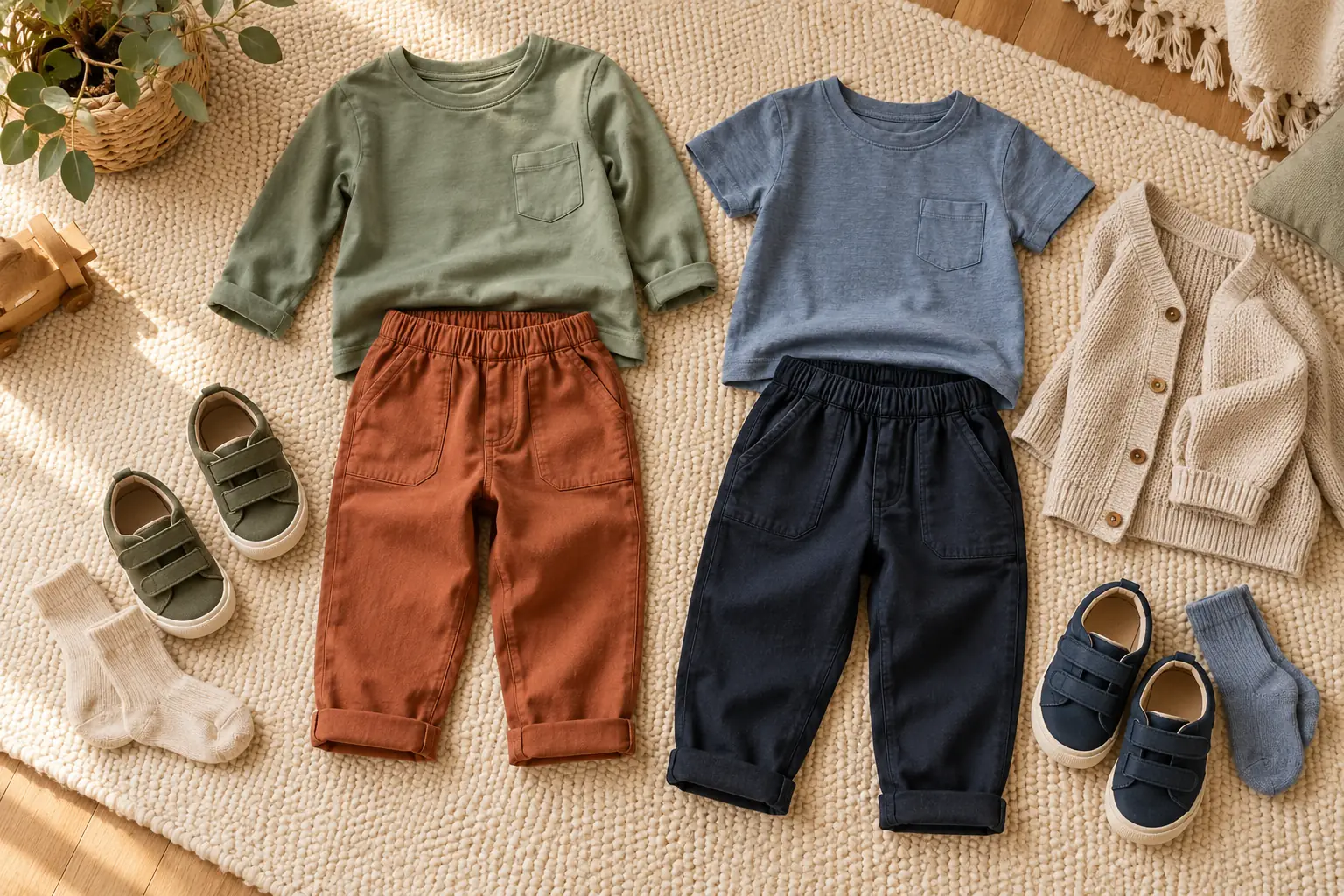
A useful wardrobe starts with fit, comfort, access and the work of the actual day. Choose the decision you need to make instead of starting with a shopping list.
Keep body measurements separate from garment dimensions and use the actual product chart.
Choose one manageable action and keep the rest of the help available.
Check movement, toilet access, layers, care and the school’s requirements.
Organize what fits now around safely arranged storage and a realistic laundry cycle.
Follow the actual product’s labels and current recall guidance. Measuring and outfit checks are practical decision tools, not safety certification or an assessment of a child’s development. Free family planners · Sources and limitations
Start with measurements and the specific garment, then check sitting, reaching and everyday movement. An age label is only a place to begin.
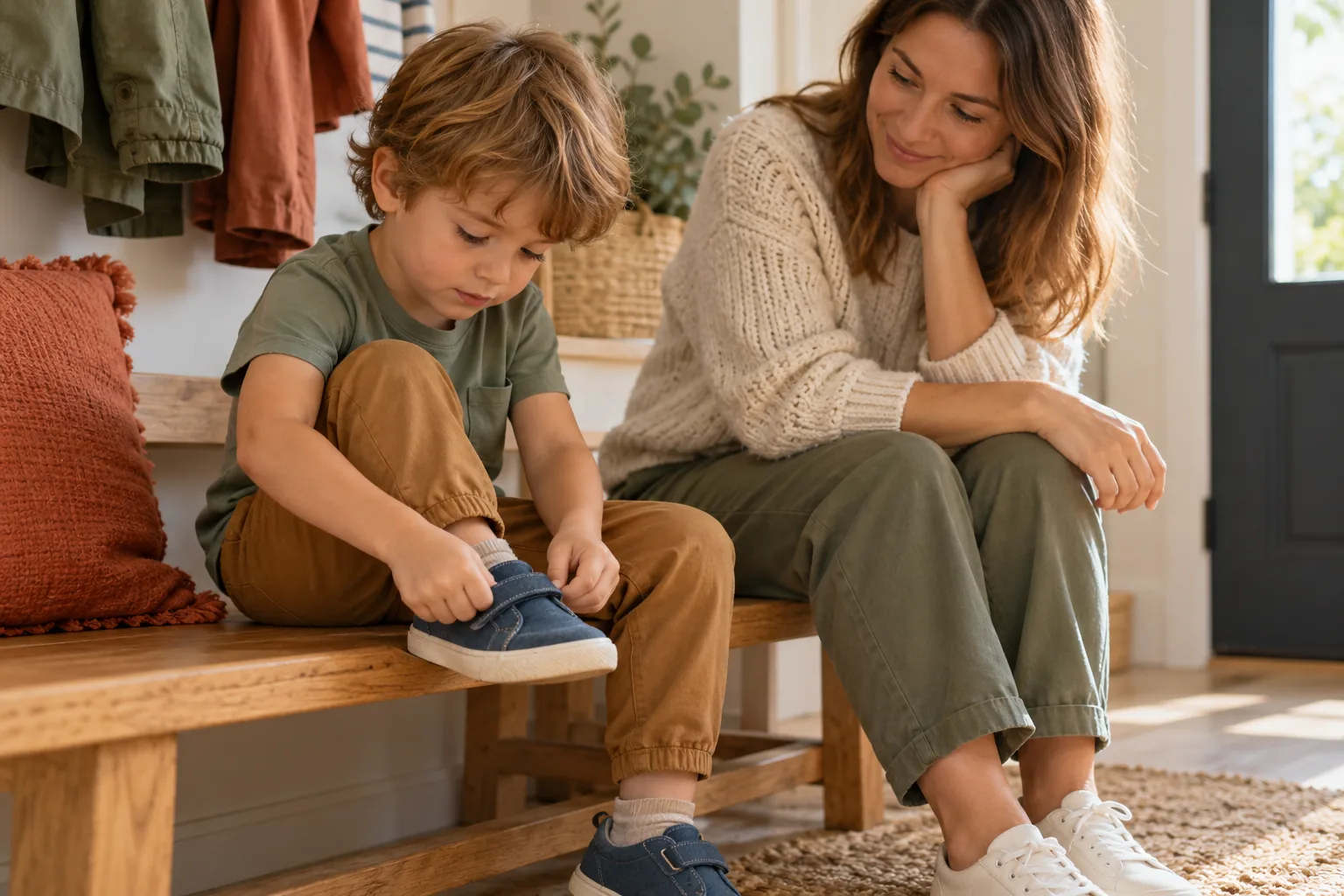
Choose one small part of dressing, make the clothing easier to use, and practice when the clock is not deciding the outcome.
A school outfit has to work when a child sits, plays, eats and uses the toilet. Start with those tasks before choosing more pieces.
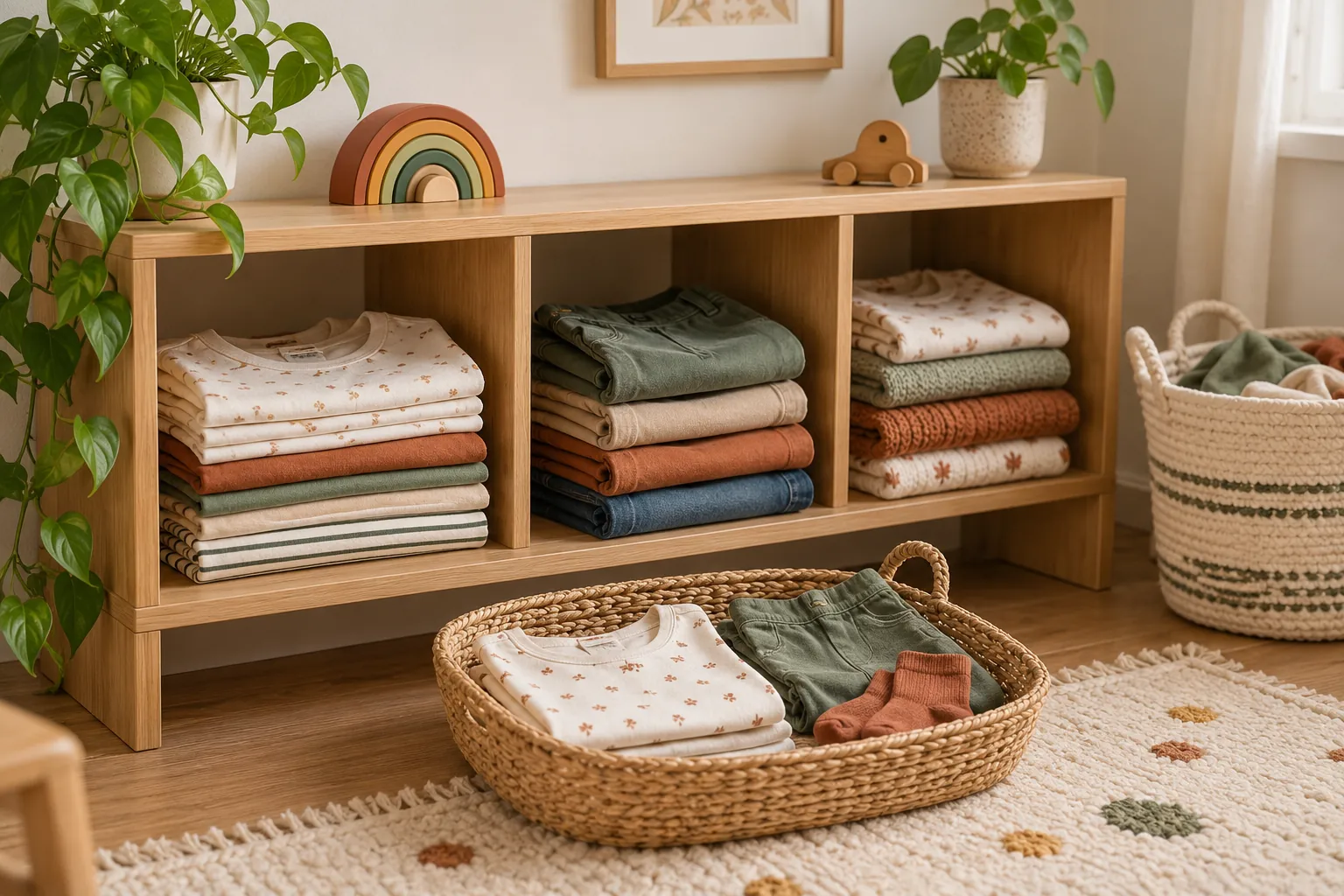
Keep usable clothes easy to find, separate items needing a decision, and plan around the laundry cycle you can actually maintain.