Comfortable School Clothes for Kids: A Fit, Movement and Care Checklist
A school outfit has to work when a child sits, plays, eats and uses the toilet. Start with those tasks before choosing more pieces.
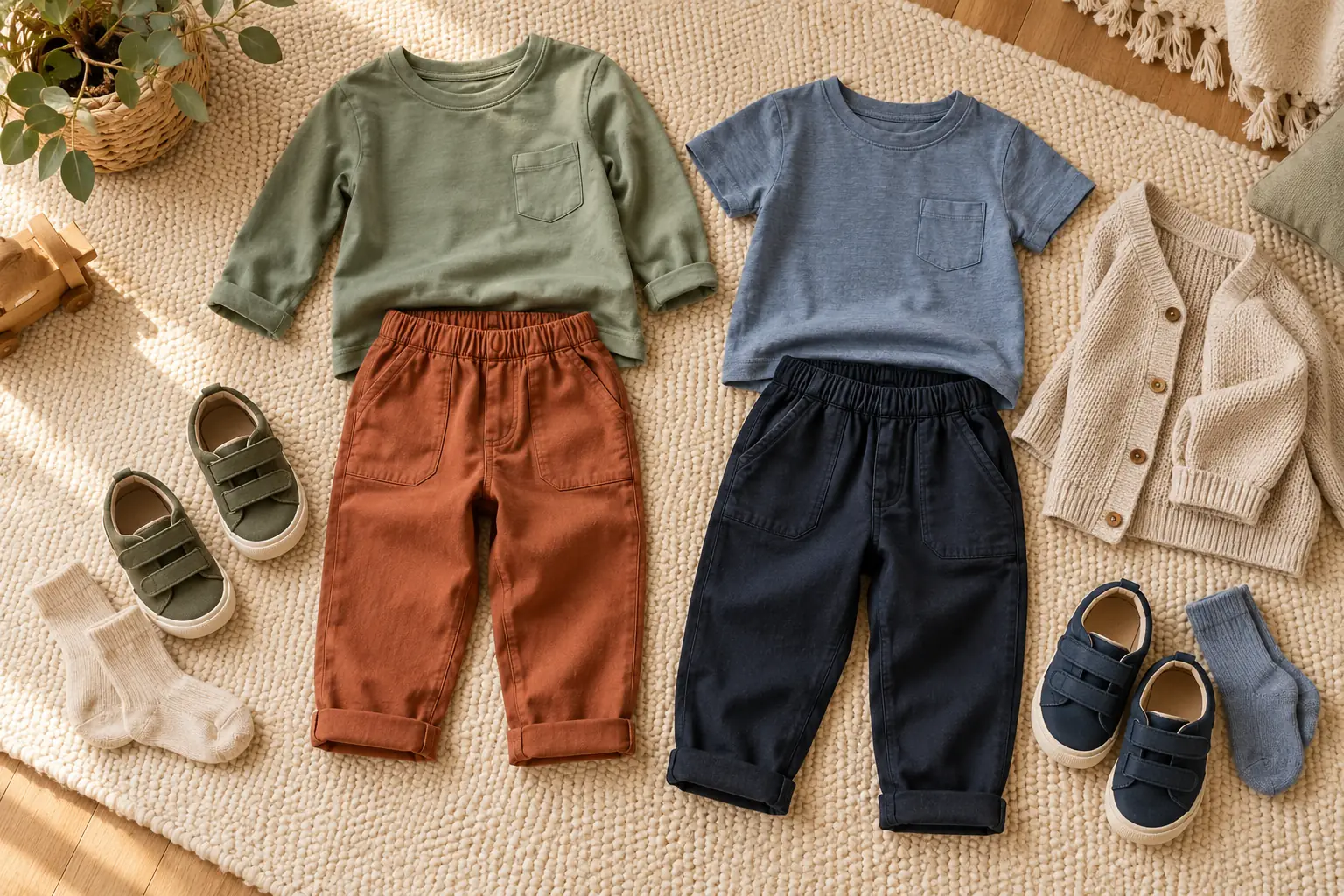
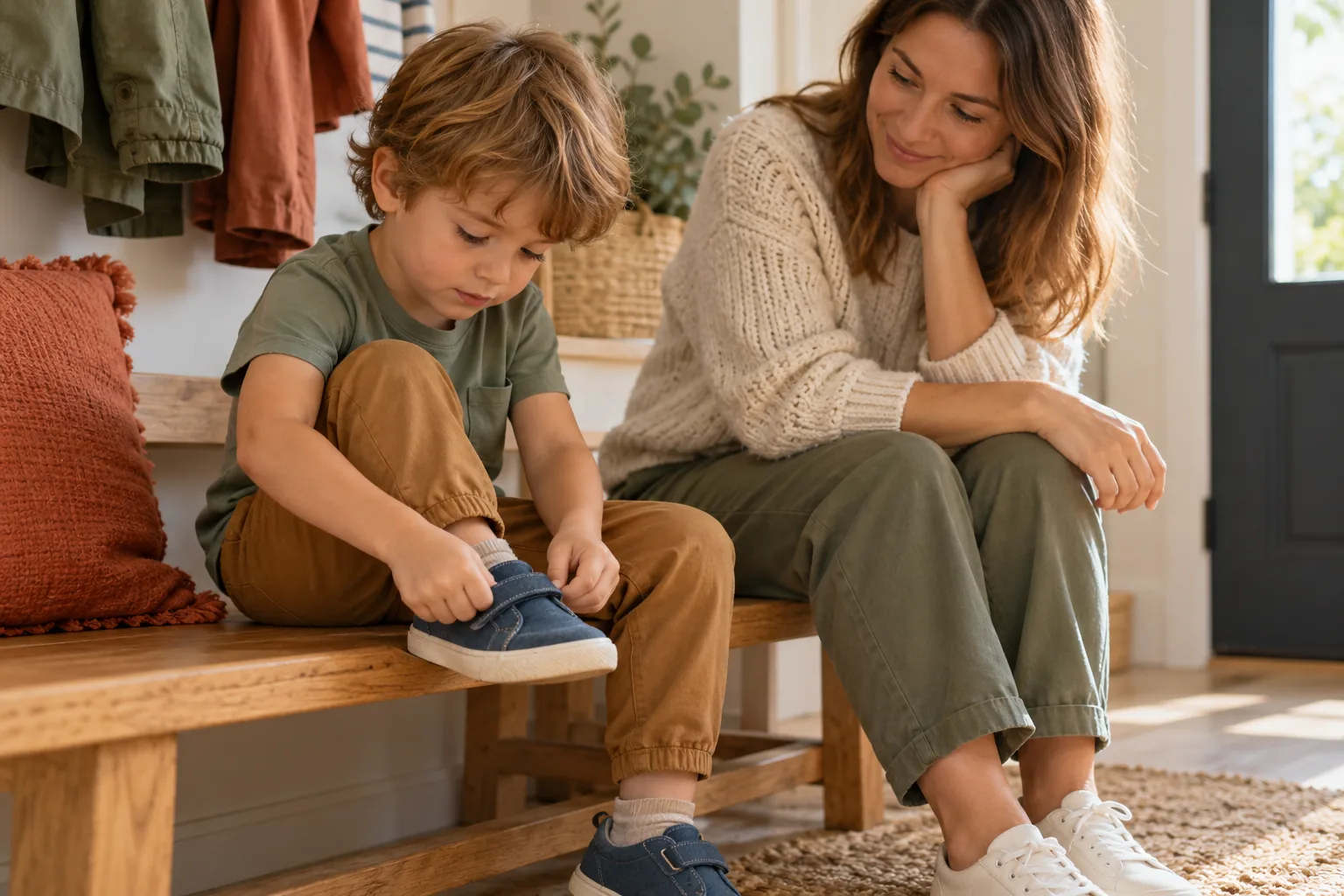
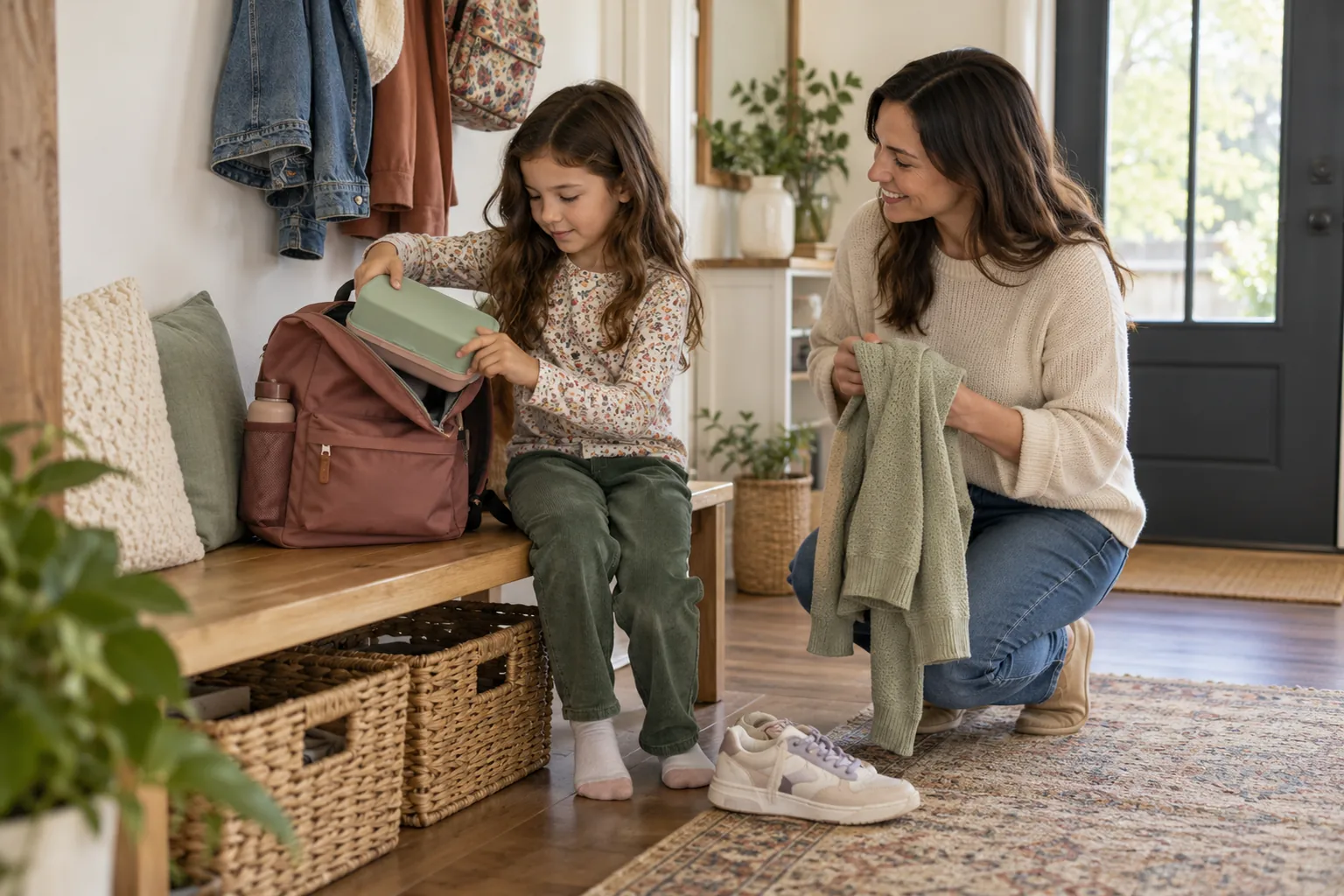
AI-generated editorial image. Fictional scene, not a photographed case study. How we use images
School clothing can look right on a hanger and still make the day difficult. This checklist considers the actual work of an outfit: moving, changing, staying comfortable and returning through the laundry. It does not rank brands or certify products.
The short answer
Check the school’s requirements, then try the outfit during sitting, reaching, walking and toilet-related closures. Choose manageable layers, investigate discomfort and read the care instructions. Keep a school-approved spare kit. No single fabric, label or price guarantees comfort.
- Who this helps
- Families choosing school clothing or a uniform
- Start with
- Ask the school about clothing, changing and assistance requirements.
- Use this guide to
- Check comfort, movement, toilet access, care and a usable spare kit.
Ask the school before building an outfit list
The AAP first-day checklist includes clothing requirements and whether a different set is needed for PE or art. Ask your own school about footwear, outdoor time, changing support and spare clothes. A general clothing guide cannot replace those local details.
- Which garments or colours are required, and are there acceptable alternatives?
- Does the child change for PE, messy play or outdoor activities?
- Who can assist with closures, and how can the child ask?
- Where should spare clothing be stored, and how are wet items returned?
Use a movement and access checklist
| Check | Try it during the trial | Possible next action |
|---|---|---|
| Movement | Sit at a table, reach up and squat comfortably. | Compare another cut if the item pulls or restricts movement. |
| Hands and feet | Check that cuffs and hems do not get in the way. | Choose a workable length instead of relying on growing room. |
| Toilet access | Try opening and closing the waist with usual support. | Use a manageable fastening or agree on adult assistance. |
| Comfort | Ask about the neck, seams, waist and socks. | Try a different construction or familiar garment. |
| Changing layers | Put a cardigan on and take it off. | Choose a closure and storage plan the child can use. |
| Care | Read the actual washing and drying instructions. | Keep the item only if its care fits the household routine. |
Treat fabric and construction as separate choices
A fibre label alone cannot tell you how every garment will feel. Consider the knit or weave, seams, waistband construction and the child’s own response. A child may accept one cotton shirt and dislike another. Where a label irritates, investigate the source of rubbing and preserve care and safety information before making an alteration.
The FTC apparel and labeling overview explains the role of fibre and care information on clothing. Our practical suggestion is to check that information before buying duplicates. A garment that needs a care process you cannot manage may be a poor everyday choice even when the first try-on is comfortable.
Check outerwear separately
The CPSC identifies neck and hood drawstrings on children’s upper outerwear as an entanglement and strangulation hazard. Inspect jackets and sweatshirts rather than treating decorative details as harmless. Follow current CPSC guidance, recall notices and the manufacturer’s instructions; a school approval does not certify an individual item.
Plan for the actual forecast and the school’s outdoor arrangements. A removable layer can be easier to adjust between indoor and outdoor settings, but this is not a temperature formula or car-seat instruction. Check the relevant safety guidance for travel equipment separately.
A spare-clothes kit without unnecessary extras
- Use the school’s requested list as the starting point, then include a workable top, bottom and any requested underwear or socks in the child’s current fit.
- Choose closures familiar to the child and note any support they need.
- Use the school’s labeling method and an appropriate return bag for wet clothing.
- Check the kit after use and when fit or the season changes; a packed item is only useful if it is still usable.
Run one ordinary-day trial
Before buying several copies, let the child wear one outfit through normal home activities and follow its care instructions. Note any change in fit or comfort. A useful record is specific: “The waist was comfortable while sitting, but the sleeve covered the hand after reaching.” Avoid turning one household observation into a product-performance claim for every child.
If measurements are the uncertainty, use the clothing size guide. If finding a clean outfit is the recurring problem, a smaller wardrobe system may help more than another purchase.
Frequently asked questions
Is cotton always the most comfortable option?
How many school outfits should I buy?
Can I choose easy-waist trousers instead of buttons?
Sources and further reading
Public guidance behind this article. The examples and planning tables are suggestions to adapt, not reported research or tested outcomes.
- American Academy of Pediatrics — Checklist for the First Day of School
- Federal Trade Commission — Apparel and Labeling
- CPSC — Drawstrings in Children’s Upper Outerwear
This guide does not claim product testing or safety certification. Read our editorial policy or suggest a correction.
Reference this page
Cite this guide
JULI. “Comfortable School Clothes for Kids: A Fit, Movement and Care Checklist.” Kidowear. Updated .
https://kidowear.xyz/blog/comfortable-school-clothes-for-kidsKeep the relevant context with a quotation and link to this article. The planning examples are suggestions to adapt; the linked source list provides the original guidance. Sharing and classroom printing
Written by
JULI
US-based parenting and children’s apparel writer
JULI is a US-based contributor with a background in children’s apparel. Articles cover clothing fit, school outfits, toddler behavior and everyday routines, with practical examples and source links.
This article is general guidance, not medical advice. Every child is different — when in doubt, check with your pediatrician or a licensed professional. See our disclaimer.