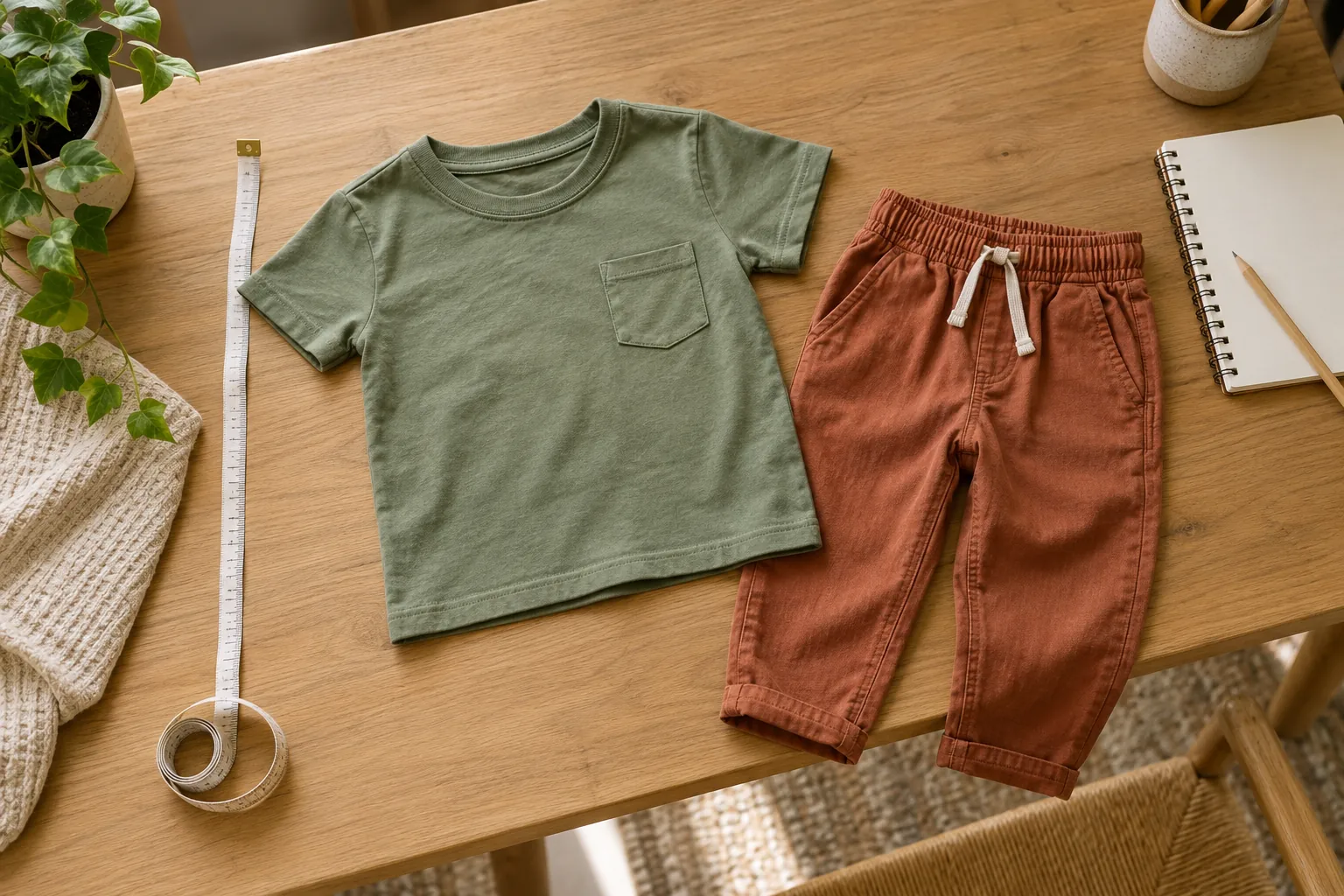
Kids Clothing Size Guide: Measure, Compare and Check the Fit
Start with measurements and the specific garment, then check sitting, reaching and everyday movement. An age label is only a place to begin.
By JULIOct 19, 20265 min
Measure your child’s foot while they stand with their heel against a wall, then use the longer foot’s length in the chart above. The tool will show a matching US kids size and its UK, EU, and CM/JP equivalents. Check the shoe brand’s chart and have your child try the shoes on to confirm the fit.

Measure standing, in the socks your child will wear.
Transcribed from Nike’s published kids footwear chart. Ages are Nike’s rough guide for baby and toddler sizes. Other brands and styles can size differently.
| US | Group | UK | EU | CM/JP | Foot length (in) | Foot length (cm) |
|---|---|---|---|---|---|---|
| 1C | Babyabout 3 months | 0.5 | 16 | 7 | 3 9/16 | 9.0 |
| 2C | Babyabout 6 months | 1.5 | 17 | 8 | 3 15/16 | 10.0 |
| 3C | Babyabout 9 months | 2.5 | 18.5 | 9 | 4 1/4 | 10.8 |
| 4C | Toddlerabout 12 months | 3.5 | 19.5 | 10 | 4 9/16 | 11.6 |
| 5C | Toddlerabout 18 months | 4.5 | 21 | 11 | 4 15/16 | 12.5 |
| 6C | Toddlerabout 24 months | 5.5 | 22 | 12 | 5 1/4 | 13.3 |
| 7C | Toddlerabout 36 months | 6.5 | 23.5 | 13 | 5 9/16 | 14.1 |
| 8C | Toddler | 7.5 | 25 | 14 | 5 15/16 | 15.1 |
| 9C | Toddler | 8.5 | 26 | 15 | 6 1/4 | 15.9 |
| 10C | Toddler | 9.5 | 27 | 16 | 6 9/16 | 16.7 |
| 10.5C | Little kid | 10 | 27.5 | 16.5 | 6 3/4 | 17.1 |
| 11C | Little kid | 10.5 | 28 | 17 | 6 15/16 | 17.6 |
| 11.5C | Little kid | 11 | 28.5 | 17.5 | 7 1/16 | 17.9 |
| 12C | Little kid | 11.5 | 29.5 | 18 | 7 1/4 | 18.4 |
| 12.5C | Little kid | 12 | 30 | 18.5 | 7 7/16 | 18.9 |
| 13C | Little kid | 12.5 | 31 | 19 | 7 9/16 | 19.2 |
| 13.5C | Little kid | 13 | 31.5 | 19.5 | 7 3/4 | 19.7 |
| 1Y | Little kid | 13.5 | 32 | 20 | 7 15/16 | 20.2 |
| 1.5Y | Little kid | 1 | 33 | 20.5 | 8 1/16 | 20.5 |
| 2Y | Little kid | 1.5 | 33.5 | 21 | 8 1/4 | 21.0 |
| 2.5Y | Little kid | 2 | 34 | 21.5 | 8 7/16 | 21.4 |
| 3Y | Little kid | 2.5 | 35 | 22 | 8 9/16 | 21.7 |
| 3.5Y | Big kid | 3 | 35.5 | 22.5 | 8 3/4 | 22.2 |
| 4Y | Big kid | 3.5 | 36 | 23 | 8 13/16 | 22.4 |
| 4.5Y | Big kid | 4 | 36.5 | 23.5 | 8 15/16 | 22.7 |
| 5Y | Big kid | 4.5 | 37.5 | 23.5 | 9 1/8 | 23.2 |
| 5.5Y | Big kid | 5 | 38 | 24 | 9 1/4 | 23.5 |
| 6Y | Big kid | 5.5 | 38.5 | 24 | 9 3/8 | 23.8 |
| 6.5Y | Big kid | 6 | 39 | 24.5 | 9 9/16 | 24.3 |
| 7Y | Big kid | 6 | 40 | 25 | 9 11/16 | 24.6 |
Kidowear · kidowear.xyz/tools/kids-shoe-size-chart · Source: nike.com/size-fit/kids-footwear. Foot length in cm is converted from Nike’s inch values.
Enter your child’s foot length in inches or centimeters to find the matching row, or choose a US size to see its equivalents. This kids shoe size chart reproduces Nike’s published kids footwear chart. Use its result as a starting point, then check the chart for the specific shoes you plan to buy.
US sizes marked C are child sizes used for toddlers and little kids. They run through 13.5C, then the scale starts again at 1Y. The Y means youth, or big kid, and this big kid shoe size chart runs through 7Y. A 1Y follows 13.5C in the size sequence.
Each row also gives UK, EU, and CM/JP equivalents. For example, US 10C corresponds to UK 9.5, EU 27, and CM/JP 16 cm; US 1Y corresponds to UK 13.5, EU 32, and CM/JP 20 cm. Read across a single row when converting sizes, and use the foot-length entry when starting with a measurement. The CM/JP size label should not be mistaken for the measured foot-length entry.
Measure while your child is standing, with their full weight on the foot. Have them wear the socks they usually wear with the shoes you are buying. Measuring later in the day helps you compare the result with how the shoes may feel during ordinary wear.
Keep the paper and your child’s heel against the wall while you mark the toe. Measure both feet and enter the longer foot’s length in the converter. If your child moves before you make the mark, settle them back into position and take the measurement again.
If the foot length falls between chart entries, treat the nearby sizes as pairs to try, rather than assuming one will fit. Start with the longer foot’s measurement and compare it with the shoe brand’s own chart. The chart can narrow your choices, but the way a shoe fits your child settles the decision.
Have your child stand in each pair and check the space in front of the longest toe. Then watch them walk and run: the heel should stay in place, and the widest part of the foot should not feel squeezed. Ask how the shoes feel instead of judging fit only by the size printed on the box.
If neither nearby size passes those checks, try a different shoe style or brand. Moving up a size may change more than the space at the toe, including how securely the heel sits. A comfortable fit across the whole foot matters more than matching a chart row exactly.
Check fit while your child is standing in the shoes, wearing the socks they would normally use with them. Look for room in front of the longest toe and make sure the widest part of the foot is not squeezed. Your child should be able to stand comfortably without their toes pressing against the front.
Next, have your child walk and run in the store or at home on a clean floor before removing the tags. Watch whether a heel slips out as they move, and listen if they say the shoes rub or feel tight. A pair that seems fine while standing can feel different in motion.
Children’s feet grow, so repeat these checks as the shoes are worn. Re-measure when a pair starts to feel tight or your child’s fit seems to have changed, and check again when shopping for another pair. Foot pain, limping, new frequent tripping, or a concern about foot shape is a reason to talk with a pediatrician; this guide is not medical advice.
This toddler shoe size chart and big kid chart use Nike’s published size conversions. Another brand may connect the same US label to a different fit, and fit can vary between styles from the same brand. A converted size tells you which pair to consider, not how every shoe bearing that label will feel.
When switching brands, begin with a fresh foot measurement and read the size chart for the exact brand you are shopping. If that brand provides guidance for a particular style, use it alongside the general chart. Keep the longer foot in mind when deciding which size to try.
The chart is especially helpful when a listing uses an unfamiliar sizing system. Find your child’s US row to compare its UK, EU, and CM/JP labels, then check the seller’s brand-specific information. Even when the labels appear to match, confirm the fit when the shoes arrive.
Re-measure regularly because children’s feet grow. A measurement from a previous purchase may no longer describe the foot that will wear the new shoes. Measure again when shoes feel snug, when you notice a change in fit, or before choosing a pair online.
For an online order, use the longer foot’s current measurement and check the specific brand’s chart before selecting a size. Read the product’s size label carefully, especially around the change from C to Y sizes. If the listing shows UK, EU, or CM/JP sizes, use the converter to identify the corresponding chart row.
Once the shoes arrive, keep the tags on while your child tries them on with their usual socks. Have them stand, walk, and run on a clean floor, checking toe room, heel hold, and comfort across the widest part of the foot. If those checks do not feel right, the size conversion alone is not a reason to keep the pair.
Numbers and lists in the tool come from these public pages, checked on October 20, 2026. The tool is a planning aid, not medical, developmental or fitting advice.
Spotted a wrong number? Tell us and read our editorial policy.
Start with measurements and the specific garment, then check sitting, reaching and everyday movement. An age label is only a place to begin.

Choose one small part of dressing, make the clothing easier to use, and practice when the clock is not deciding the outcome.
Comfortable School Clothes for Kids: A Fit, Movement and Care Checklist
Use height and weight to find a starting US clothing size, from 2T-5T through 4-14, based on Carter's published chart.
Open toolChoose age-appropriate chores from the American Academy of Pediatrics list for ages 5-12, then print a weekly chart for your family.
Open toolMake a printable sticker chart for potty training, bedtime, brushing teeth, tidying, getting dressed, or a goal you choose.
Open tool