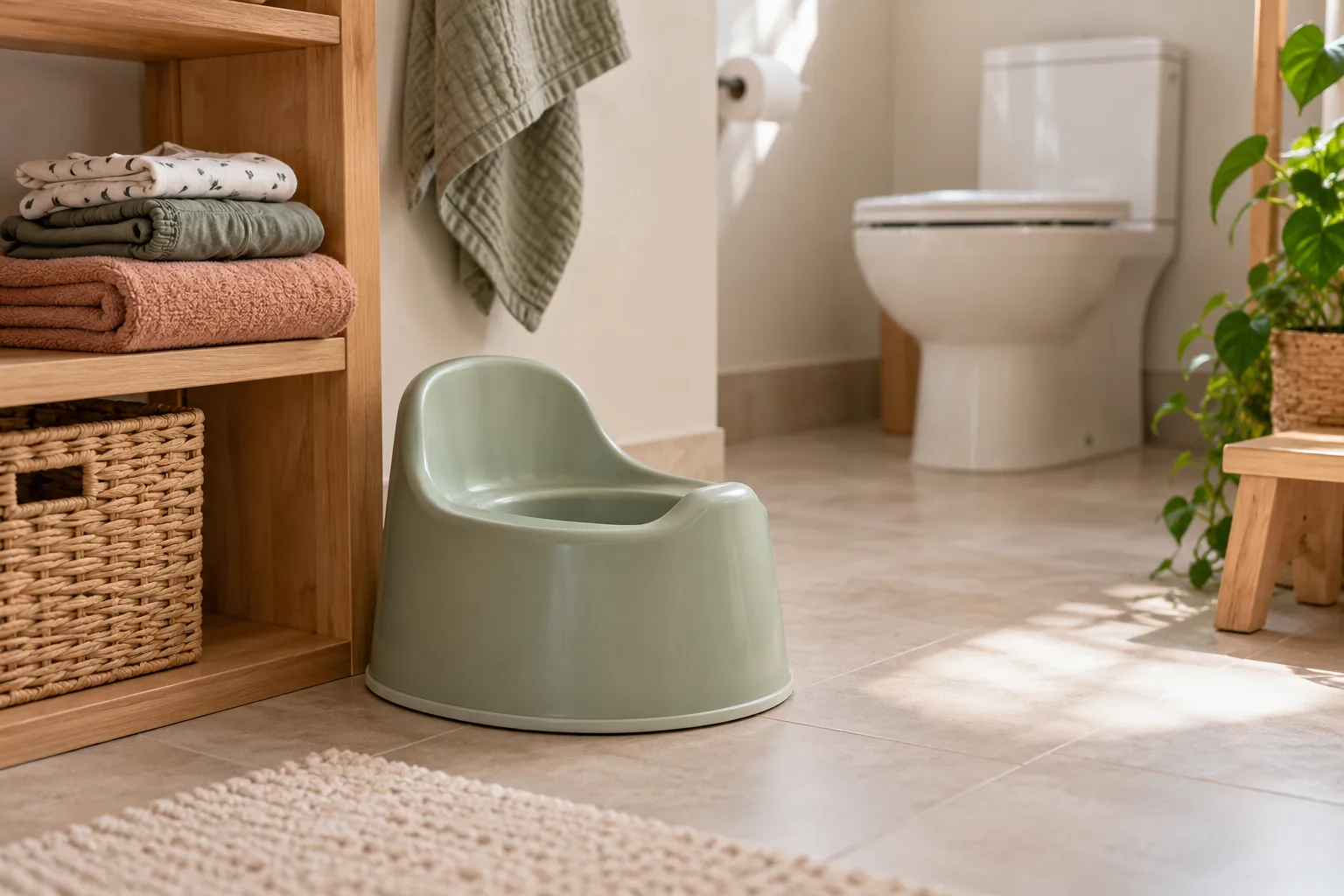
How to Potty Train a Toddler: A Calm, Step-by-Step Guide
Potty training goes best when you start from readiness, not a calendar. Here's how to spot the signs, set up the days, and handle accidents without drama.
By JULIMay 2, 20265 min
Choose one behavior your child can do, and write it in words they understand. Let your child help choose a small reward, then pick a sticker target they can reach. Give a star right after the behavior, with specific praise. Keep the chart visible, and change your approach if it is not helping.
Specific and doable, e.g. “I put my shoes by the door.”
Activities and time together work well.
My star chart
0 of 7 stars
When the chart is full: Choose a park trip with a grown-up
Kidowear · kidowear.xyz/tools/reward-chart-maker · Give the sticker straight away with specific praise. Earned stars stay on the chart.
Choose a template for potty training, bedtime, brushing teeth, tidying toys, or getting dressed. You can also choose a custom goal. Write one specific behavior in your child's words, select 5, 7, 10, 14, or 21 stickers or stars, and add a small reward. Print the chart or tap stars on screen. No signup is needed.
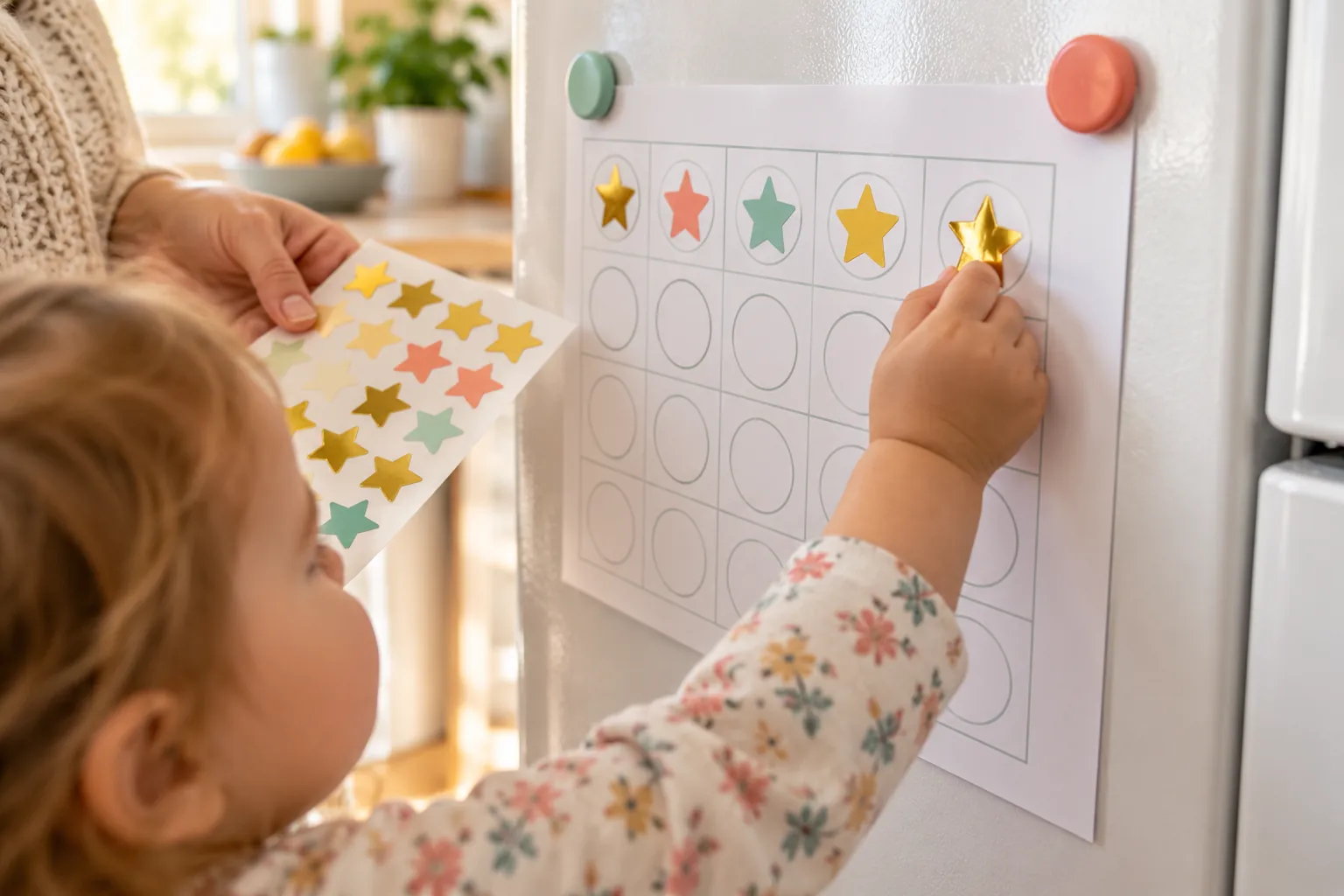
Invite your child to help make the chart and choose the reward. The Welsh Government's Parenting. Give it time guidance recommends involving children in both decisions and putting the chart where they can see it. If you print a chart, choose a visible spot so your child can follow their progress.
When your child does the chosen behavior, give the sticker or star straight away and say specifically what they did well. The CDC's parenting guidance for toddlers describes praise, rewards, and positive attention as ways to encourage desired behavior. Praise small efforts as your child works toward the goal.
A reward chart for kids is easier to follow when it asks for one behavior at a time. The Welsh Government guidance recommends naming exactly what the child should do. Instead of putting an entire bedtime routine on one line, choose a step your child understands and can do, then write that step in their words.
Look at the template as a starting point, not the full instruction. A brushing teeth chart still needs a clear behavior written on it, and a custom chart needs the same clarity. Before you start, check that you and your child would recognize the moment the behavior has happened.
Keep the goal reachable so your child has a chance to earn stickers. If the behavior turns out to be too much at once, choose a smaller step and make a new chart. Praising small efforts fits the Welsh Government's guidance and helps you respond to what your child actually does.
Ask your child what they would enjoy when the chart is complete, then choose something achievable. The Welsh Government guidance favors free or low-cost rewards, including activities rather than sweets. Time together can be the reward: write the activity plainly on the chart so your child knows what they are working toward.
Keep the reward close enough to the goal that your child can see how their stickers lead to it. The Welsh Government guidance recommends rewarding often with small prizes because long gaps can reduce motivation. A reward does not need to be expensive or elaborate to give the chart a clear finish.
The sticker itself also marks a moment to pay attention to your child's effort. Give it immediately after the chosen behavior, along with specific praise. When the chart is complete, follow through with the reward you chose together, then decide whether the same goal still needs a chart.
For a first chart, choose a target that suits your child's age, attention span, and the behavior you picked. The maker offers 5, 7, 10, 14, and 21 stars. If your child needs a goal they can reach sooner, start with 5 or 7 rather than a longer row.
If your child can stay interested in a longer goal, consider 10, 14, or 21. Treat these as choices for your family, not age rules. A reachable goal matters more than filling a large chart, especially while your child is learning what the stickers mean.
Watch how the first chart goes. If the reward feels too far away, choose fewer stickers next time or make the behavior easier to do. The Welsh Government guidance advises frequent small rewards and says to try something different if a chart is not working.
For a potty training reward chart, choose a step your child can actually do, such as sitting on the potty. The American Academy of Pediatrics explains that toilet training involves several skills, including noticing body signals, understanding them, planning how to reach the potty, staying there long enough, and communicating a need for help.
That is why a small, clear step can be a better chart goal than a result your child cannot always control. Write the step in your child's words, and give the star and specific praise when they do it. Keep the focus on the chosen action rather than on whether every potty visit succeeds.
Do not use the chart to punish accidents or take earned stars away. The Welsh Government guidance says never to threaten to remove stickers or remove them for bad behavior. This guide is not medical advice; if you have persistent toileting concerns, talk with your child's pediatrician.
A chart can become confusing when it covers several behaviors, uses vague wording, or asks for a goal that is hard to reach. Return to one specific action and a reachable sticker target. Let your child help choose the reward, and keep the chart somewhere they can see it.
Another mistake is waiting to acknowledge the behavior or using earned stickers as a penalty. The Welsh Government guidance recommends giving a sticker straight after the behavior with specific praise, praising small efforts, and never taking stickers away. If the chart is not working, its guidance is to try something different.
Use the chart as short-term support while your child learns the behavior. Once praise and the routine can carry the habit, you can stop making new charts for that goal. If the habit still needs support, change the behavior, target, or reward so the next chart offers a reachable step.
Numbers and lists in the tool come from these public pages, checked on October 20, 2026. The tool is a planning aid, not medical, developmental or fitting advice.
Spotted a wrong number? Tell us and read our editorial policy.
Potty training goes best when you start from readiness, not a calendar. Here's how to spot the signs, set up the days, and handle accidents without drama.

Positive discipline means firm limits with warmth — not letting everything slide. Here are the techniques that teach behavior instead of just punishing it.
How to Teach Kids to Get Dressed: One Manageable Step at a Time
Enter a child's foot length to compare US C/Y, UK, EU, and CM sizes using Nike's published kids shoe chart.
Open toolUse height and weight to find a starting US clothing size, from 2T-5T through 4-14, based on Carter's published chart.
Open toolChoose age-appropriate chores from the American Academy of Pediatrics list for ages 5-12, then print a weekly chart for your family.
Open tool