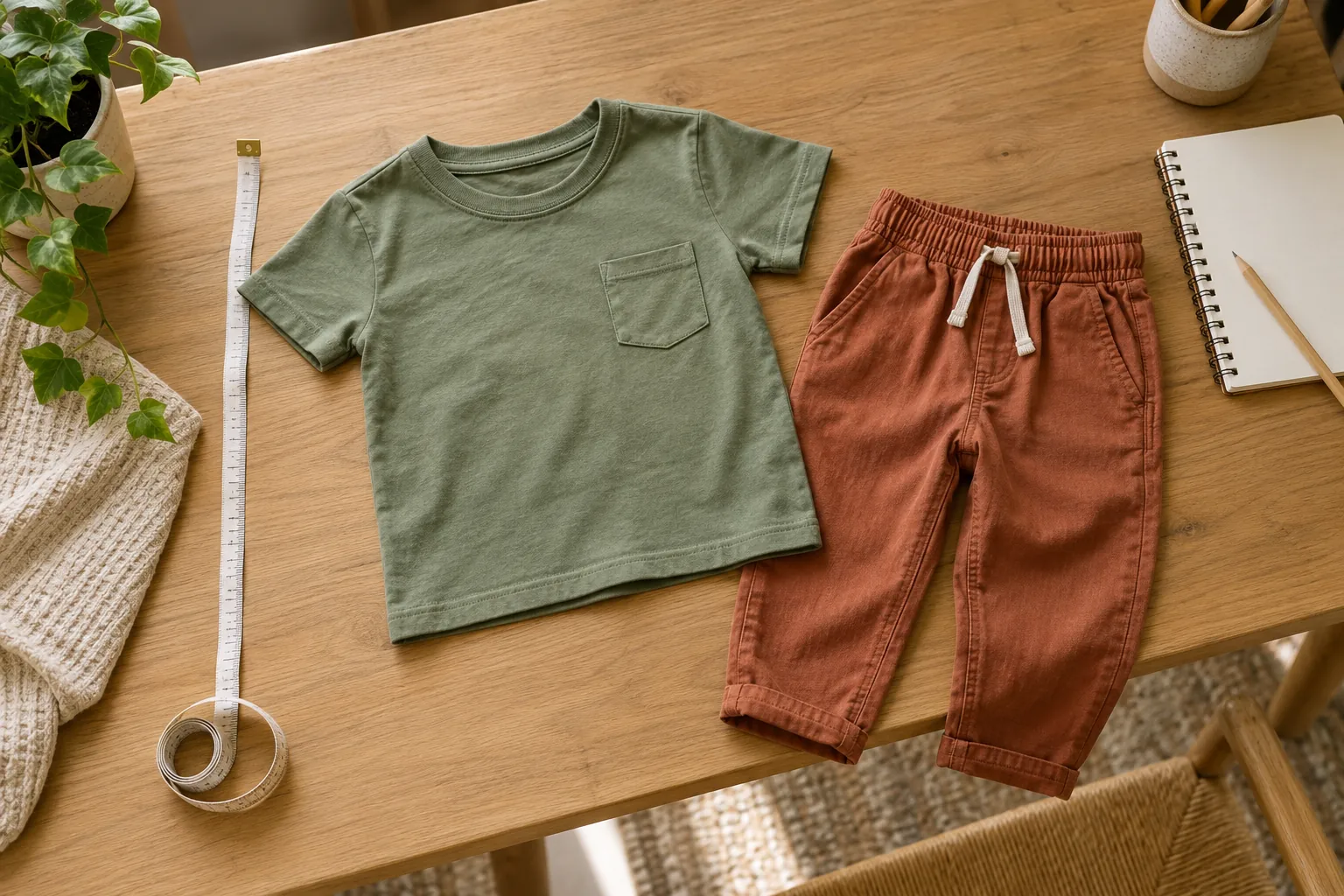
Kids Clothing Size Guide: Measure, Compare and Check the Fit
Start with measurements and the specific garment, then check sitting, reaching and everyday movement. An age label is only a place to begin.
By JULIOct 19, 20265 min
Measure your child’s height and weight, then compare both with the chart for the clothing you want to buy. Use the calculator’s suggested size as a starting point. If height and weight point to different sizes, consider the garment’s fit, your child’s waist measurement, and whether the item has adjustable features.
For pants, shorts and skirts.
Results appear as you type. Nothing you enter leaves this page.
Example ranges from Carter’s published size chart (pajama height and weight; bottoms waist). Check the chart for the product you are buying.
| Size | Height (in) | Height (cm) | Weight (lb) | Weight (kg) | Waist, regular (in) |
|---|---|---|---|---|---|
| 2TToddler | 35–36.5 | 89–93 | 29–31 | 13.2–14.1 | 21 |
| 3TToddler | 36.5–39 | 93–99 | 31–33 | 14.1–15.0 | 21.5 |
| 4TToddler | 39–41.5 | 99–105 | 33–37.5 | 15.0–17.0 | 22 |
| 5TToddler | 41.5–44 | 105–112 | 37.5–42 | 17.0–19.1 | 22.5 |
| 4Kids | 40–42.5 | 102–108 | 34–38.5 | 15.4–17.5 | 22 |
| 5Kids | 42.5–45 | 108–114 | 38.5–43 | 17.5–19.5 | 22.5 |
| 6Kids | 45–48 | 114–122 | 43–50 | 19.5–22.7 | 23 |
| 7Kids | 48–51.5 | 122–131 | 50–59.5 | 22.7–27.0 | 23.5 |
| 8Kids | 51.5–53.5 | 131–136 | 59.5–69.5 | 27.0–31.5 | 24.5 |
| 10Kids | 53.5–56 | 136–142 | 69.5–87 | 31.5–39.5 | 25 |
| 12Kids | 56–58 | 142–147 | 87–97 | 39.5–44.0 | 26 |
| 14Kids | 58–59.5 | 147–151 | 97–110 | 44.0–49.9 | 28 |
Kidowear · kidowear.xyz/tools/kids-clothing-size-calculator · Source: carters.com/size-chart (checked October 20, 2026). Metric values are converted.
Enter your child’s height and weight in the units you have. You can also enter a waist measurement when shopping for bottoms. The calculator compares those measurements with Carter’s published chart and suggests a US size from toddler sizes 2T to 5T or kids sizes 4 to 14.
Look at the height and weight results together. If they point to different sizes, the calculator shows that difference so you can decide which measurement matters more for the garment. The full chart is available alongside the result, making it easier to see nearby sizes rather than relying on a single label.
Treat the result as a shopping starting point. Carter’s chart supplies the example ranges, including pajama and bottoms ranges, but the fit of another brand or a particular product may differ. Before ordering, compare your child’s measurements with the chart on that product page.
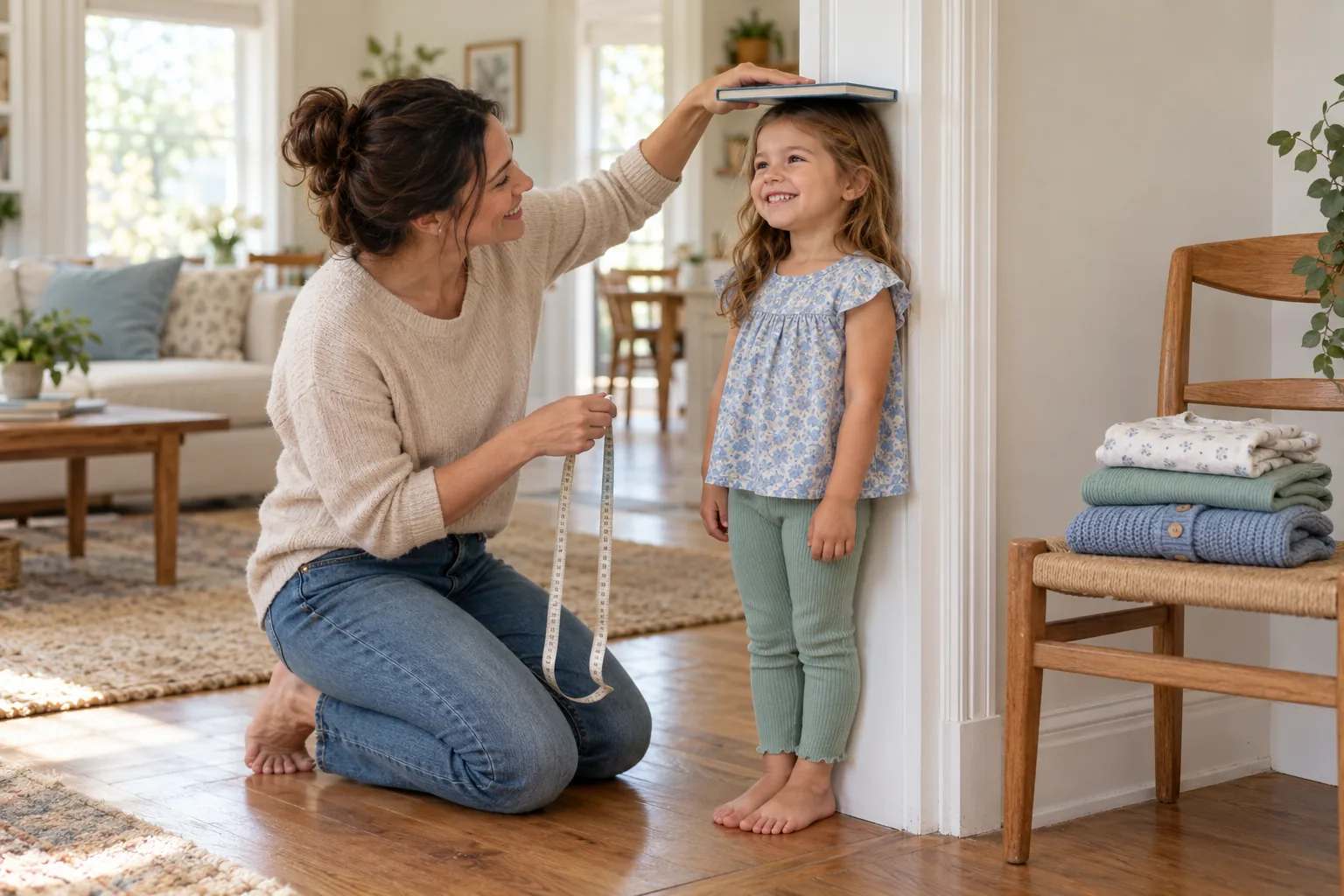
For height, have your child stand without shoes with their heels against a wall. Place a flat object on top of their head, mark where it meets the wall, and measure from the floor to the mark. Use that body measurement in the calculator rather than estimating from the size of clothes they already own.
For waist, wrap a measuring tape around the natural waist over light clothing. Keep the tape snug but not tight. A waist measurement can be especially useful for bottoms, since Carter’s offers slim, regular, plus, and husky fits that differ by waist measurement.
Keep body measurements separate from measurements of a garment that fits well. A shirt or pair of pants includes its own cut and room for movement, so its dimensions serve a different purpose. When a product chart asks for chest, hip, or inseam as well as height or waist, measure the child’s body for those entries and use the well-fitting garment as a separate comparison.
Toddler and kids labels can appear close while describing different cuts. On Carter’s example chart, 4T covers 39 to 41.5 inches and 33 to 37.5 pounds, while kids size 4 covers 40 to 42.5 inches and 34 to 38.5 pounds. Those ranges overlap, so measurements alone may leave both labels worth considering.
The distinction often comes down to shape. Toddler sizes usually allow more room for a diaper or a rounder toddler shape. Kids sizes are usually longer and slimmer. When comparing 2T vs 4 size, keep in mind that they belong to different sizing groups, and use the relevant chart ranges and garment cut to guide the choice.
Look at how the child currently wears similar clothes. If a toddler cut fits comfortably through the middle but seems short, or a kids cut has the right length but feels narrow, that observation can help you interpret the chart. The product’s own size information remains the best reference for its intended fit.
Start with the measurement that affects the garment most. Height is useful for one-pieces and pants length, chest matters for tops and jackets, and waist matters for bottoms. If height suggests one size while weight suggests another, use those garment details to decide which fit issue is most likely to matter.
Consider how quickly your child is growing and whether the item can be adjusted. Adjustable waistbands and cuffs can make a nearby size easier to wear as the child grows. Extra length is useful only when the garment is comfortable and safe to wear now; too-long pants or dragging hems can create a tripping hazard.
A size suggestion cannot tell you how every style will sit on your child. Review the chart, the garment’s cut, and any fit details on the product page together. If the choice still seems close, a clear return policy gives you a practical way to check the fit at home.
Every brand has its own chart, so the same size label is not a promise of the same fit. Age labels are rough guides; height and weight are more reliable starting points. For shopping decisions, use the chart for the specific product whenever it is available, even if a familiar size has worked before.
First, check whether the chart describes body measurements or measurements of the finished garment. Compare body measurements with body ranges, and compare a well-fitting garment with garment dimensions. Keep these comparisons separate so that built-in room or a different cut does not make a size appear misleading.
Then check which measurements the chart uses for that clothing type. A tops chart may make chest especially useful, while a bottoms chart may give waist more importance. Carter’s bottoms options also include slim, regular, plus, and husky fits, so a size label may need a waist fit choice as well.
Buying ahead can make sense when you know which measurements the future garment needs to accommodate, but do not let a larger label replace a fit check. Look at the child’s current measurements, the chart, and any adjustable features. Choose clothing that can be worn comfortably when needed, especially for items where length affects movement.
When shopping online, keep the product chart open while reviewing the description and images. Check whether the listing explains its cut, waist options, or adjustable cuffs. If the seller provides garment measurements, compare them with a similar item that already fits your child, while keeping those dimensions separate from body measurements.
Read the return terms before ordering, particularly when your child falls between chart ranges or is trying a new brand. Once the item arrives, check comfort and movement as well as length. If the fit is wrong, the product’s chart and your saved measurements can help you choose a better size or cut for an exchange.
Numbers and lists in the tool come from these public pages, checked on October 20, 2026. The tool is a planning aid, not medical, developmental or fitting advice.
Spotted a wrong number? Tell us and read our editorial policy.
Start with measurements and the specific garment, then check sitting, reaching and everyday movement. An age label is only a place to begin.
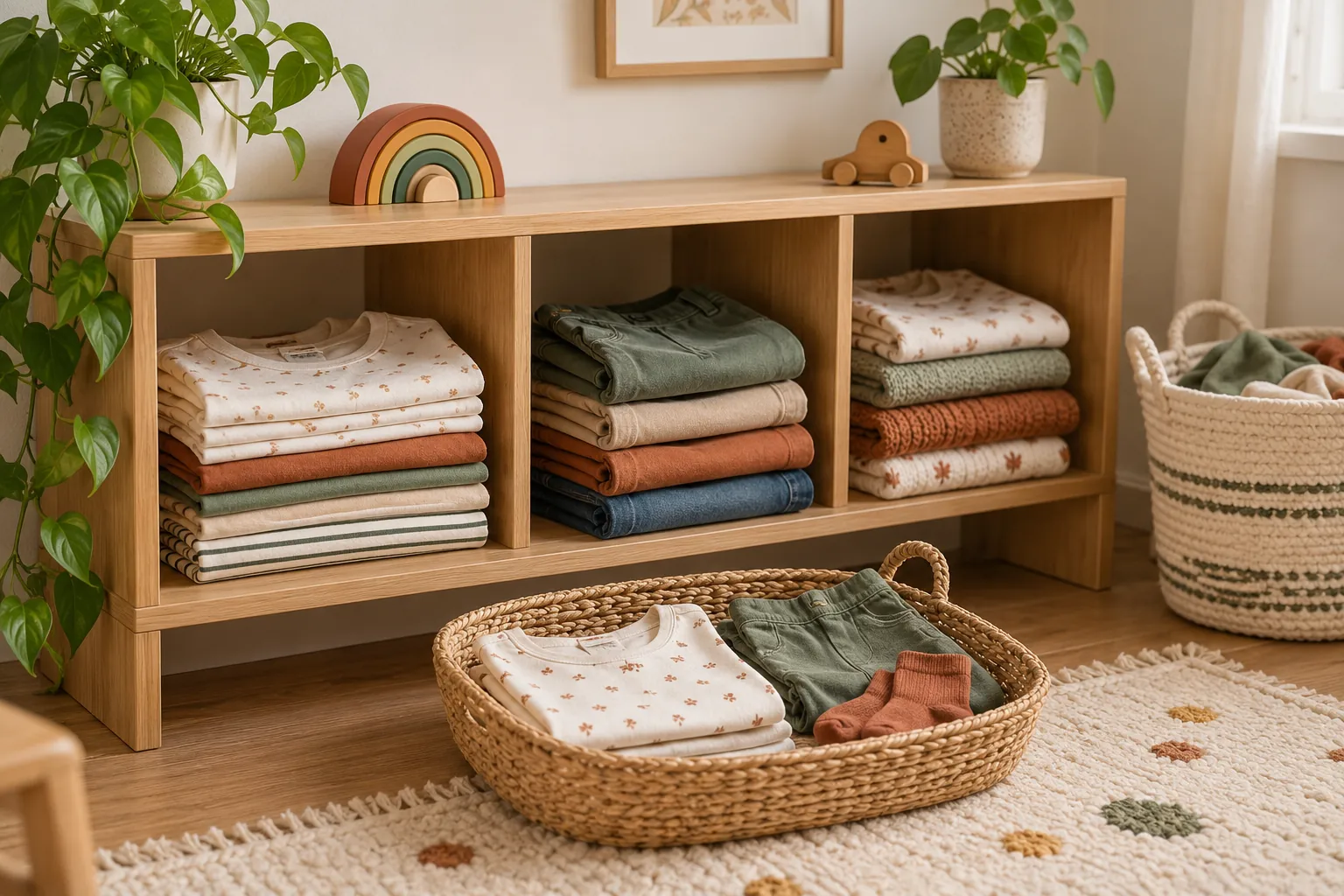
Keep usable clothes easy to find, separate items needing a decision, and plan around the laundry cycle you can actually maintain.
Comfortable School Clothes for Kids: A Fit, Movement and Care Checklist
Enter a child's foot length to compare US C/Y, UK, EU, and CM sizes using Nike's published kids shoe chart.
Open toolChoose age-appropriate chores from the American Academy of Pediatrics list for ages 5-12, then print a weekly chart for your family.
Open toolMake a printable sticker chart for potty training, bedtime, brushing teeth, tidying, getting dressed, or a goal you choose.
Open tool