How to Organize Kids Clothes Around Fit, Laundry and Daily Use
Keep usable clothes easy to find, separate items needing a decision, and plan around the laundry cycle you can actually maintain.
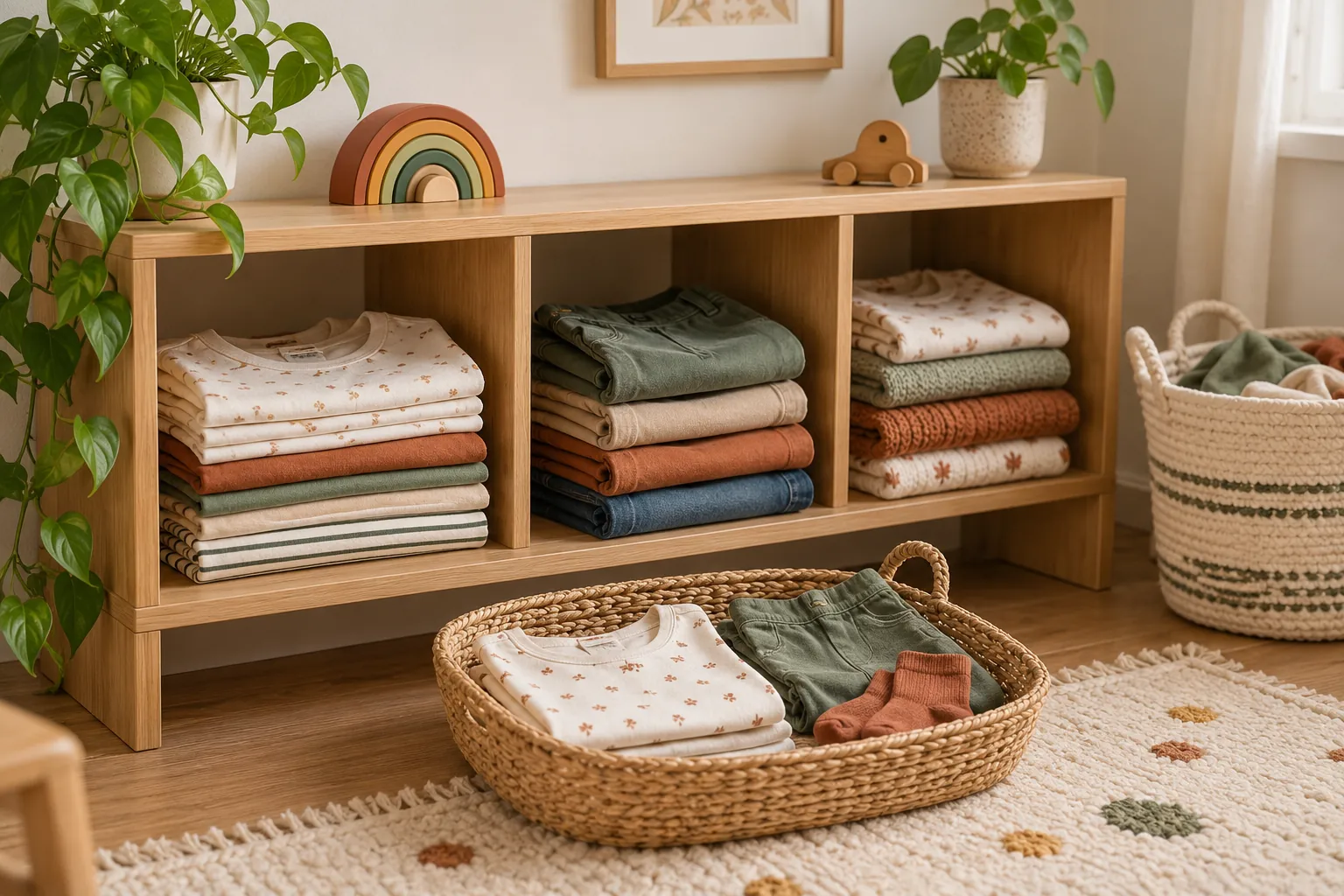
AI-generated editorial image. Fictional scene, not a photographed case study. How we use images
A useful clothing system does not need matching baskets or a large wardrobe. It needs to distinguish what fits now, what is clean and what the child can find. This is a household planning method, not a storage-product review or a fixed capsule-wardrobe rule.
The short answer
Sort clothes by current usability, keep everyday choices at an accessible level and plan the number of clean outfits around your actual laundry cycle. Separate outgrown, repair and next-size items. Keep a small backup set and follow furniture anchoring guidance before encouraging children to use storage independently.
- Who this helps
- Adults managing a child’s everyday clothing
- Start with
- Sort one category by what fits and works now.
- Use this guide to
- Match reachable, safely stored outfits to the actual laundry cycle.
Sort by use before sorting by colour
Work on one category at a time, such as school trousers. A whole-room emptying session can leave no usable system when you run out of time. Ask which items the child actually wears comfortably, and check fit rather than keeping every piece with a familiar label.
| Group | What belongs here | Next action |
|---|---|---|
| Wear now | Fits comfortably, is in usable condition and suits current needs. | Return it to the everyday area. |
| Needs a decision | Uncertain fit, missing a usable closure or a care problem. | Check it separately instead of returning it to the daily pile. |
| Keep for later | Clearly identified next-size or later-season items. | Store apart with an adult-readable note about what is inside. |
| Pass on or dispose responsibly | Outgrown or no longer needed items. | Check condition, recipient rules and local disposal options. |
Make the accessible area safe first
Reachable storage is useful only within a safe setup. The CPSC Anchor It! campaign advises securing furniture with drawers, doors and shelves to prevent tip-overs. Follow the furniture and anchoring-device instructions; a low-looking piece or adult supervision is not a substitute for checking the setup.
- Keep daily choices reachable without climbing or pulling several drawers open.
- Do not put a favourite item on top of furniture where it can encourage climbing.
- Store accessories with small parts and items requiring adult handling appropriately for the child.
- Check recalls and condition when bringing secondhand storage into the home.
Count outfits from laundry reality
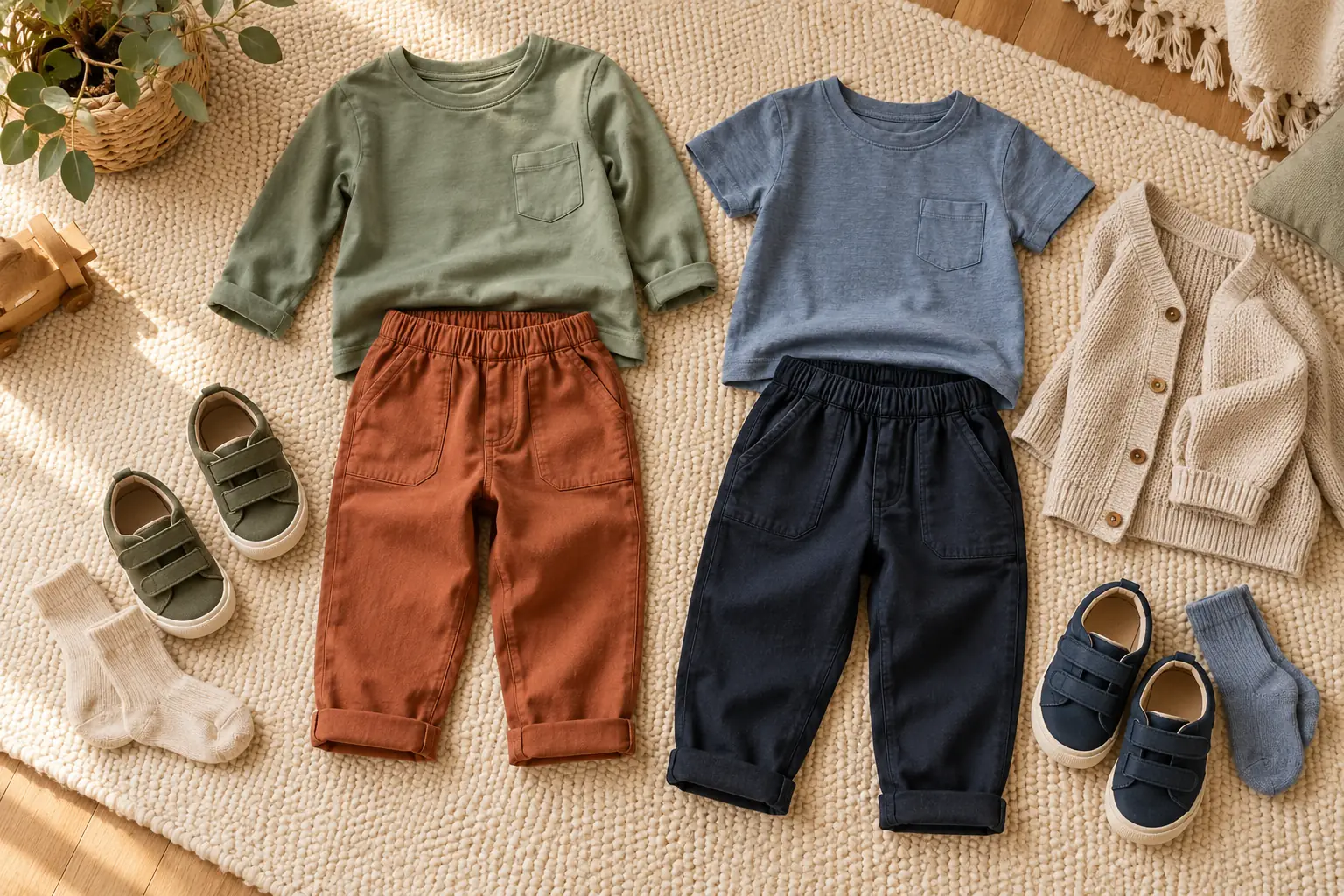
Begin with the gap between laundry becoming available, not just the day the wash is started. Include drying, folding and getting items back to the everyday area. Then consider typical clothing changes, school spares and what is already clean. Count complete workable combinations rather than the number of shirts alone.
| Planning question | Example answer | What it tells this household |
|---|---|---|
| Days before washed clothes are usable again | Three school days. | Plan enough usable combinations for those days. |
| Typical additional changes during that gap | One extra complete change. | Keep a backup that actually fits. |
| Where another set is needed | One spare kit remains at school. | Do not count the school kit as tomorrow’s outfit at home. |
| What already works | Several tops but only two comfortable bottoms. | Check the bottleneck before buying more tops. |
This example describes one possible planning exercise. It does not establish that another family needs the same quantity, or that buying clothing is the answer. Reusing compatible pieces or changing laundry timing may address the gap.
Give each repeated task one place
- Keep tomorrow’s clothing together if choosing it in advance helps.
- Use a clear route for dirty clothes so that worn pieces do not return to the clean shelf.
- Keep a small place for items that need a fit or repair decision; review it before it becomes permanent storage.
- After a school spare is used, restock it before considering the bag ready again.
Review outgrown items without promising a recycling route
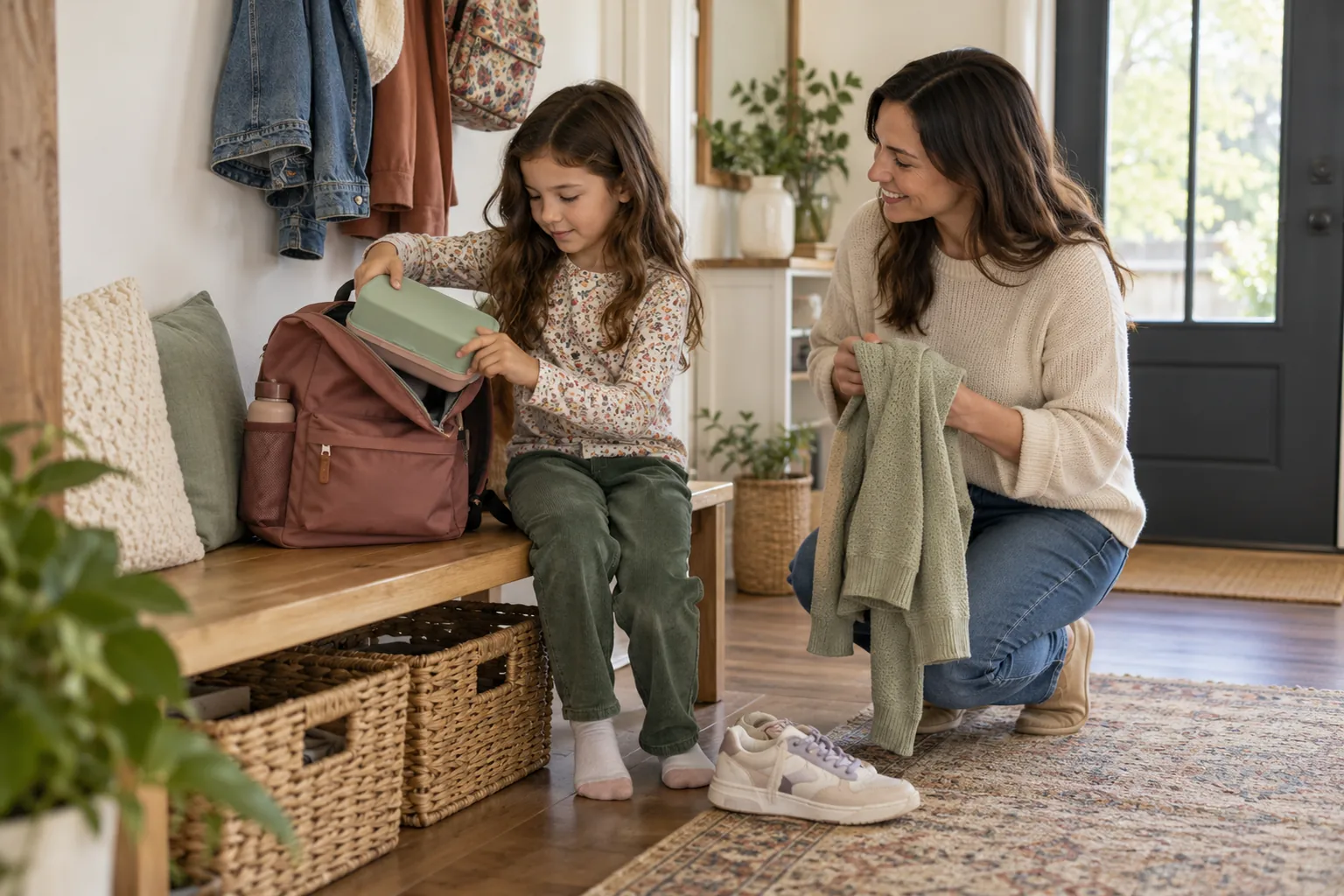
Check whether an item is clean, wearable and appropriate for the intended recipient. Confirm an organization’s current acceptance rules before donating, and do not assume that every collection bin accepts damaged textiles. The EPA’s waste guidance distinguishes reducing, reusing, repairing and recycling; local services determine what is actually available.
Set aside repair work only if it is realistic for you to complete it. A damaged safety-related component needs appropriate advice rather than an improvised modification. Keep original care and safety information with items when relevant.
A short weekly reset
- Return clean clothes to the area the child uses.
- Check whether the next few days include PE, messy play or a change in weather.
- Restock used school spares and check the familiar backup outfit.
- Choose one item from the decision pile and resolve it. Stop before the reset becomes another large task.
If the same item keeps returning to the rejected pile, revisit fit and comfort rather than blaming the child for the system. If an outfit is easy to find but hard to put on, use the dressing guide to reduce the practical barrier.
Frequently asked questions
Do children need a capsule wardrobe?
Should I remove everything the child does not wear?
Can low furniture still need anchoring?
Sources and further reading
Public guidance behind this article. The examples and planning tables are suggestions to adapt, not reported research or tested outcomes.
This guide does not claim product testing or safety certification. Read our editorial policy or suggest a correction.
Reference this page
Cite this guide
JULI. “How to Organize Kids Clothes Around Fit, Laundry and Daily Use.” Kidowear. Updated .
https://kidowear.xyz/blog/organize-kids-clothesKeep the relevant context with a quotation and link to this article. The planning examples are suggestions to adapt; the linked source list provides the original guidance. Sharing and classroom printing
Written by
JULI
US-based parenting and children’s apparel writer
JULI is a US-based contributor with a background in children’s apparel. Articles cover clothing fit, school outfits, toddler behavior and everyday routines, with practical examples and source links.
This article is general guidance, not medical advice. Every child is different — when in doubt, check with your pediatrician or a licensed professional. See our disclaimer.