A School Morning Routine for Kids: Work Backward from Leaving Time
Work backward from the time you need to leave, move one decision to the evening and keep help available for the difficult step.
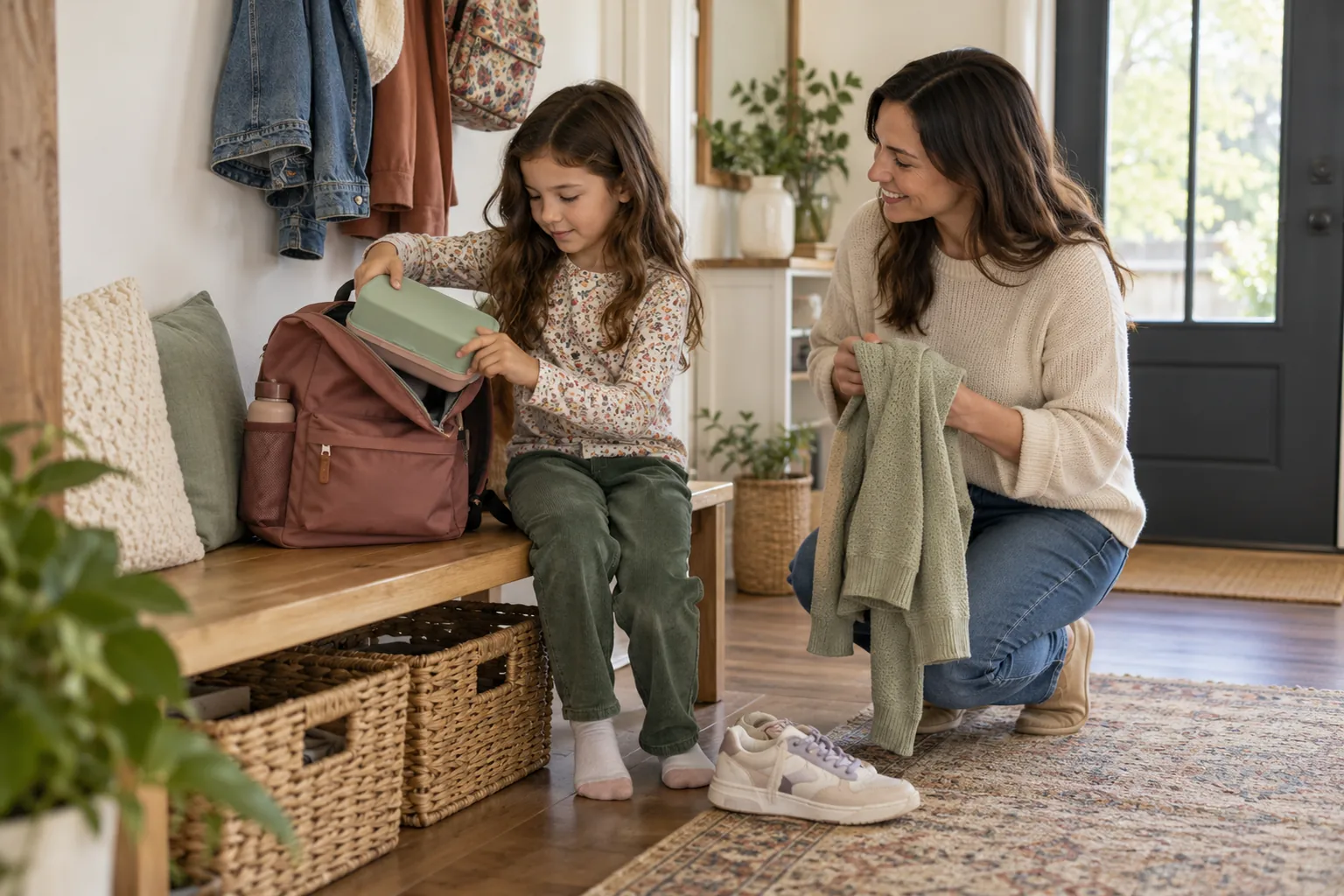
AI-generated editorial image. Fictional scene, not a photographed case study. How we use images
A morning plan should describe the family you actually have, including adult preparation, transport and the help a child needs. The example here is a planning exercise, not a promise that every family can get ready in a set number of minutes.
The short answer
Start with the real departure time and work backward through the tasks your family needs. Prepare the bag and clothing the night before, choose a short familiar sequence and assign adult support. Trial the plan, keep a fallback for late mornings and revise the step that repeatedly gets stuck.
- Who this helps
- Families planning preschool or school departures
- Start with
- Work backward from the real leaving time and name the adult support needed.
- Use this guide to
- Adapt a morning schedule and prepare a fallback for a late day.
Find the fixed point: when do you leave?
Separate school start time from leaving time. Allow for the route, parking or walking, handoff and any accessibility needs. Check transport arrangements directly with the school. The AAP first-day checklist is useful for those practical questions; it does not specify your household’s preparation time.
Write down the tasks adults must complete too. If one adult packs food while another helps a child, the plan depends on both people being available. For a single-caregiver morning, avoid a schedule that quietly assigns two simultaneous jobs to one person.
Move one decision to the evening
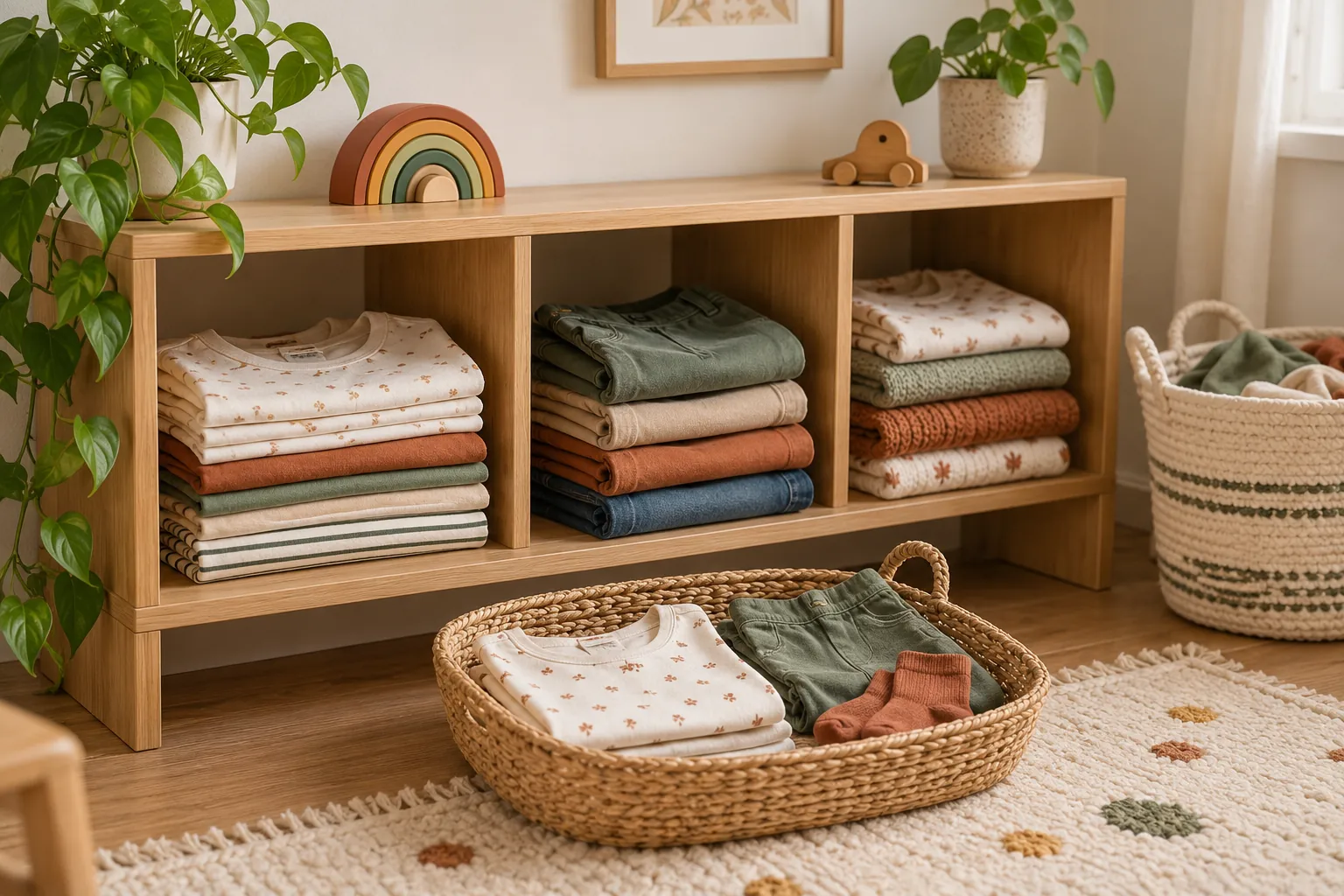
- Choose between two suitable outfits and put the needed pieces together.
- Check the bag for forms, supplies and the next day’s activities. Keep food requiring refrigeration safely stored until it is time to pack.
- Place shoes and the required layer where the child can find them.
- Agree who is helping with dressing, food and the handoff. Make an alternative for the days that person is unavailable.
A worked example for an 8:00 departure
The times below are a fictional planning example. Shift, extend or reorder them for your family; they are not a target for independence or speed. The CDC’s routine guidance supports predictable patterns while showing that schedules can differ between families.
| Time | Child’s next activity | Adult preparation or support |
|---|---|---|
| 7:00 | Wake and use the bathroom with help as needed. | Confirm transport and any changed arrangements. |
| 7:10 | Have breakfast seated. | Provide the usual eating support and complete food packing. |
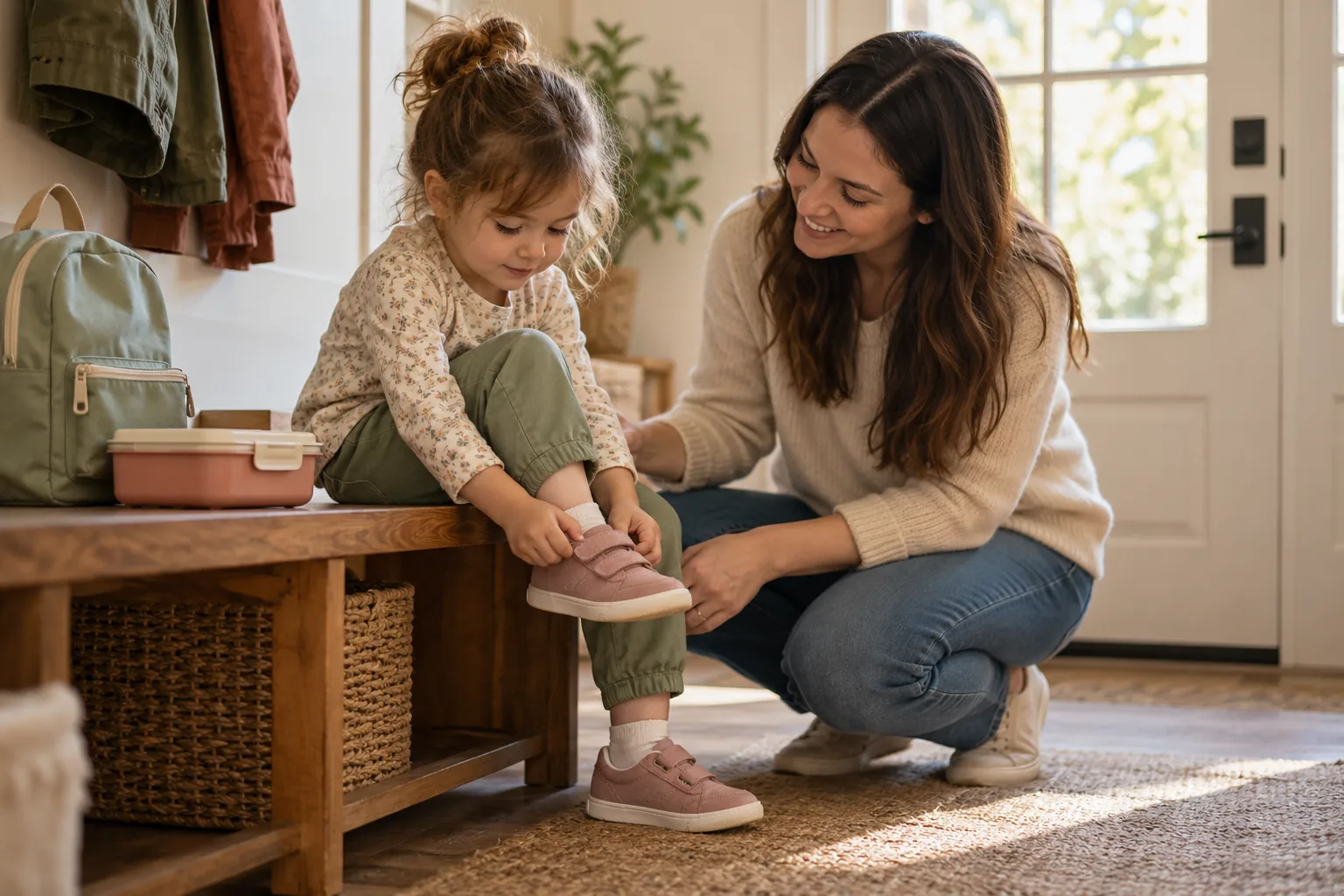
| 7:30 | Get dressed and complete the usual hygiene steps. | Assist with the specific closure or task that needs help. |
| 7:45 | Shoes, layer and bag. | Check required items and confirm the handoff adult. |
| 7:50 | A short transition buffer. | Handle a spill or missed item without adding another task. |
| 8:00 | Leave using the agreed transport plan. | Take responsibility for safe travel and arrival. |
Give one usable direction at a time
“Get ready” leaves many decisions hidden. Try “Put your feet in these trousers” or “Bring the closed lunchbox to the bag.” A child who uses pictures, gestures or other communication supports should have that support in the morning plan too. A visual checklist is an option, not a requirement to buy a tool.
Choose where practice belongs. If the zip takes longer than the departure window allows, help now and practice later. Use the dressing task guide to pick a smaller action rather than framing the whole morning as refusal.
Make a late-morning fallback in advance
| Problem | Prepared fallback | Discuss later |
|---|---|---|
| Chosen clothing is wet or uncomfortable. | Use a familiar backup outfit. | Check the laundry or fit issue. |
| A fastening is taking too long. | Offer the agreed adult help. | Choose a calm practice opportunity. |
| A nonessential item cannot be found. | Leave it and follow school requirements for essentials. | Give it a consistent storage place. |
| Transport is disrupted. | Use the household’s agreed safe alternative or contact the school. | Review the travel buffer and responsibilities. |
The fallback must still include the care and safety the child needs. Do not skip required medicine, appropriate food support, safe transport or essential assistance to make a timetable look successful. Follow the child’s professional care plan where one exists.
Review a pattern, not one difficult day
After a few ordinary mornings, note one recurring delay: finding clothes, finishing an adult task or managing the goodbye. Change that step first. A useful note is “Shoes need to be by the door before breakfast,” rather than “We are bad at mornings.” If distress around leaving persists, discuss the pattern with the school and consider the separation guide.
A difficult morning can begin the night before, but bedtime is a separate support need rather than a punishment for lateness. The bedtime routine guide includes an adaptable wind-down and printable chart.
Frequently asked questions
How long should a school morning take?
Should screens be part of the morning?
What if a checklist makes my child more upset?
Sources and further reading
Public guidance behind this article. The examples and planning tables are suggestions to adapt, not reported research or tested outcomes.
- CDC — Tips for Relying on Routines and Rules
- American Academy of Pediatrics — Checklist for the First Day of School
This article has not been independently clinically reviewed. Read our editorial policy or suggest a correction.
Reference this page
Cite this guide
MUSK. “A School Morning Routine for Kids: Work Backward from Leaving Time.” Kidowear. Updated .
https://kidowear.xyz/blog/school-morning-routine-for-kidsKeep the relevant context with a quotation and link to this article. The planning examples are suggestions to adapt; the linked source list provides the original guidance. Sharing and classroom printing
Written by
MUSK
US-based children’s apparel and family-life writer
MUSK is a US-based contributor with a background in children’s apparel. Articles cover dressing skills, school routines, play, learning and digital life, with practical examples and source links.
This article is general guidance, not medical advice. Every child is different — when in doubt, check with your pediatrician or a licensed professional. See our disclaimer.