Kids Clothing Size Guide: Measure, Compare and Check the Fit
Start with measurements and the specific garment, then check sitting, reaching and everyday movement. An age label is only a place to begin.
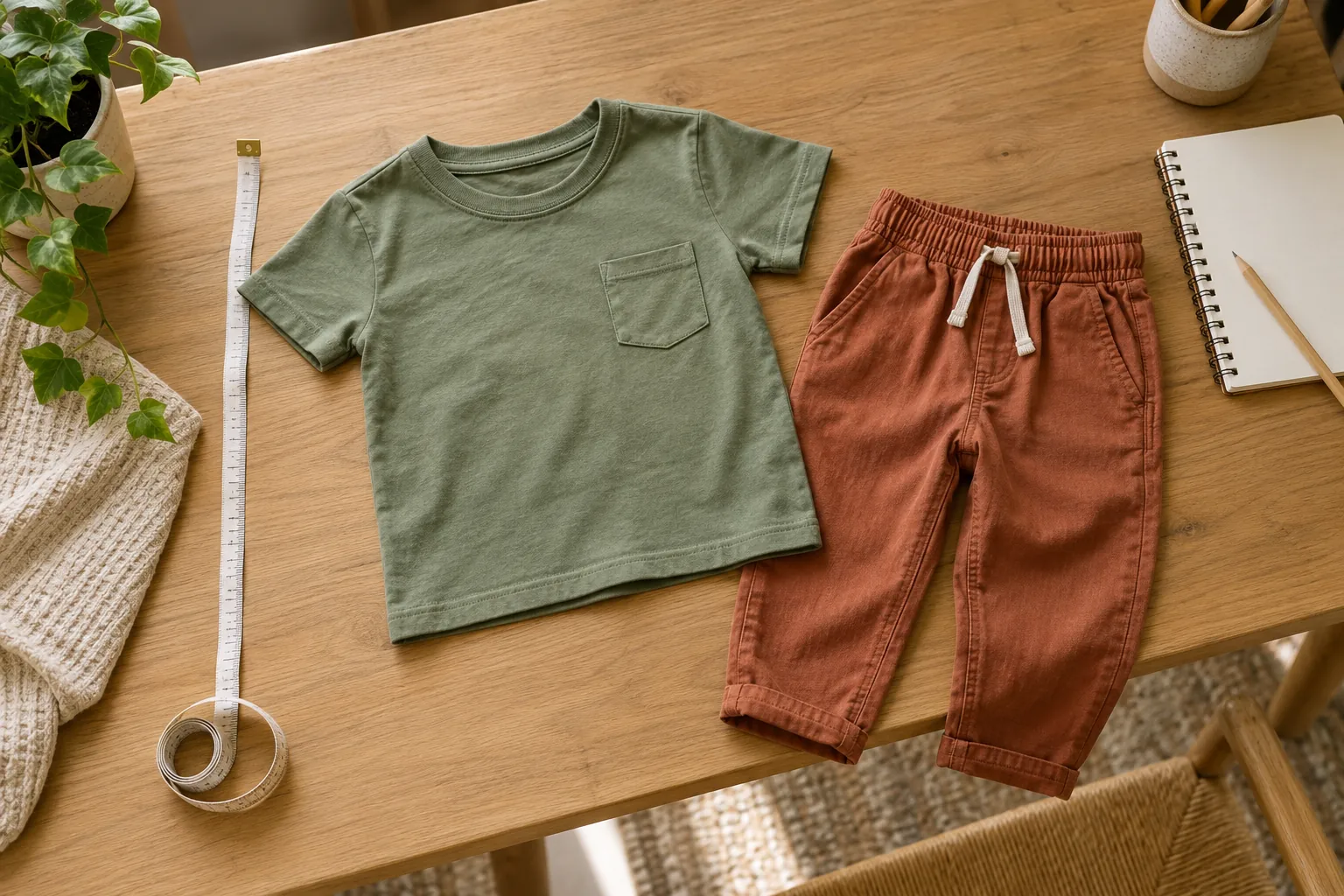
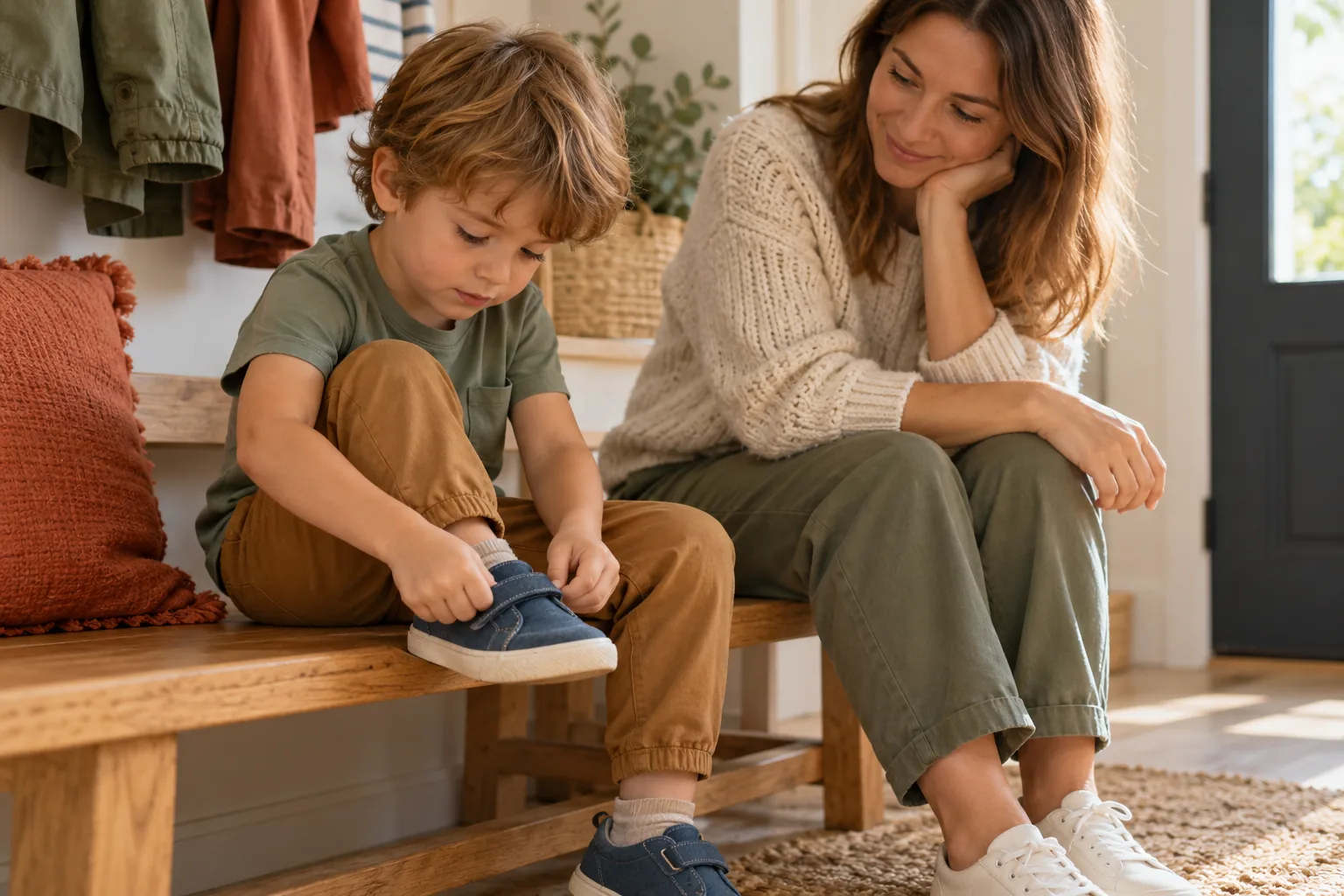
AI-generated editorial image. Fictional scene, not a photographed case study. How we use images
A size printed inside a shirt is not a description of how that shirt will feel on your child. This guide separates body measurements, garment measurements and a practical try-on. The worksheet and comparison below are Kidowear examples, not a universal size conversion chart.
The short answer
Measure what the garment maker asks for, record the date and units, and use that product’s own chart. Keep body measurements separate from flat garment measurements. Before keeping an item, check comfort, movement, fastenings and the activities your child needs to do in it.
- Who this helps
- Adults choosing clothing for children
- Start with
- Open the specific product’s chart before taking measurements.
- Use this guide to
- Separate body measurements, garment dimensions and a real movement check.
Which measurements do you actually need?
Open the chart linked from the exact product before taking every possible measurement. A T-shirt and a pair of trousers may use different information. The Carter’s chart is one example of a maker’s own size reference; it is not a chart for every brand. Lands’ End’s school fit guide also explains measuring and comparing the relevant fit range. These links illustrate chart use, not a recommendation to buy.
| Item to record | How to keep the note useful | Avoid this mix-up |
|---|---|---|
| Height | Follow the maker’s measuring instructions and record the units. | Do not substitute the child’s age for measured height. |
| Chest or waist, if requested | Use a soft tape without pulling it tight; follow the chart’s placement instructions. | Do not add arbitrary extra inches to the body measurement. |
| Garment length | Measure a similar well-fitting item flat, using the seller’s start and end points. | A flat shirt width is not a body chest circumference. |
| Fit and fastening needs | Note a comfortable waistband, usable closure or room for a required layer. | A larger size is not automatically an easier cut. |
| Date and units | Keep one dated note in inches or centimetres, matching the chart. | Do not compare a centimetre value with an inch column. |
How to measure without turning it into a test
- Explain the task: “We’re checking which clothes will be comfortable.” Ask permission and stop if the child is uncomfortable.
- Use the product’s instructions, a flexible tape and a stable standing or seated position suited to the child. Keep measuring private; there is no need to send photographs to a retailer.
- Write each number with its label and units immediately. Recheck a surprising value rather than rounding it to a preferred size.
- If body measuring is difficult, ask whether the seller supplies garment dimensions. Compare those with a similar item that already works, while recognizing that fabric and cut may differ.
A worked comparison when two sizes seem possible
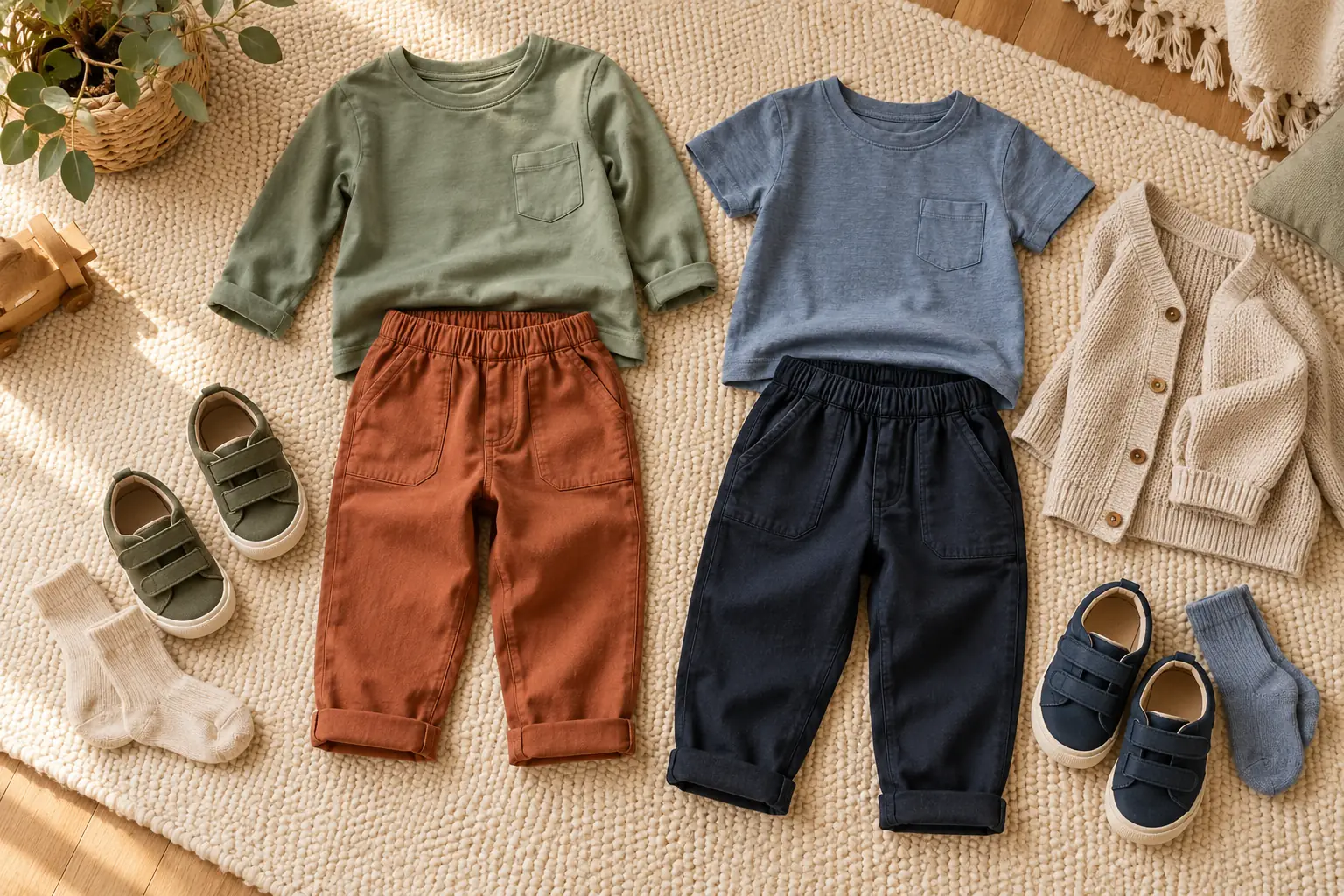
Imagine a child’s height is listed in one row of a product chart but their waist is listed in another. This is a decision example, not a reason to label the child’s body as wrong. First check whether the chart offers another fit or an adjustable waistband. Then compare the actual garment’s length and the return conditions. A different cut may solve the mismatch better than moving every item up a size.
| Question | Option A | Option B |
|---|---|---|
| Does the listed length work? | Sleeves cover the hand during play. | Sleeves clear the hand while reaching. |
| Can the waist stay in place comfortably? | Needs tightening beyond a comfortable setting. | Stays in place without a belt the child cannot manage. |
| Can the child sit and squat? | Pulls at the seat when sitting. | Allows the movement needed for the school day. |
| What decision follows? | Do not keep it just for the label or growing room. | Consider keeping only if the full try-on and care needs also work. |
The five-minute movement check
- Ask the child to sit, reach up, bend and walk in the outfit. Watch for sleeves or hems that interfere with hands and feet.
- Try the closures the child will need at the toilet or during a school change. Help can be part of the plan.
- Ask a neutral question such as “Where does this feel different?” rather than “It fits, doesn’t it?”
- Check the garment again with the intended underlayer. Do not assume the same label means the same fit in another style.
Keep a small record instead of a universal chart
Save the product name, selected size, chart link, measurement date and one sentence about what worked. For example: “Trousers stayed comfortable while seated; the child can lower the elastic waist with help.” This is more useful next time than a size label alone. Recheck after growth or a fit change; no fixed remeasurement calendar fits every child.
Use the comfortable school clothing checklist for the rest of the school-day decision. If learning a fastening is the main difficulty, start with the getting-dressed guide instead of repeatedly changing sizes.
Frequently asked questions
Should I buy a size up so clothes last longer?
Are toddler and children’s sizes interchangeable?
Do I need to upload my child’s measurements to use this guide?
Sources and further reading
Public guidance behind this article. The examples and planning tables are suggestions to adapt, not reported research or tested outcomes.
This guide does not claim product testing or safety certification. Read our editorial policy or suggest a correction.
Reference this page
Cite this guide
JULI. “Kids Clothing Size Guide: Measure, Compare and Check the Fit.” Kidowear. Updated .
https://kidowear.xyz/blog/kids-clothing-size-guideKeep the relevant context with a quotation and link to this article. The planning examples are suggestions to adapt; the linked source list provides the original guidance. Sharing and classroom printing
Written by
JULI
US-based parenting and children’s apparel writer
JULI is a US-based contributor with a background in children’s apparel. Articles cover clothing fit, school outfits, toddler behavior and everyday routines, with practical examples and source links.
This article is general guidance, not medical advice. Every child is different — when in doubt, check with your pediatrician or a licensed professional. See our disclaimer.