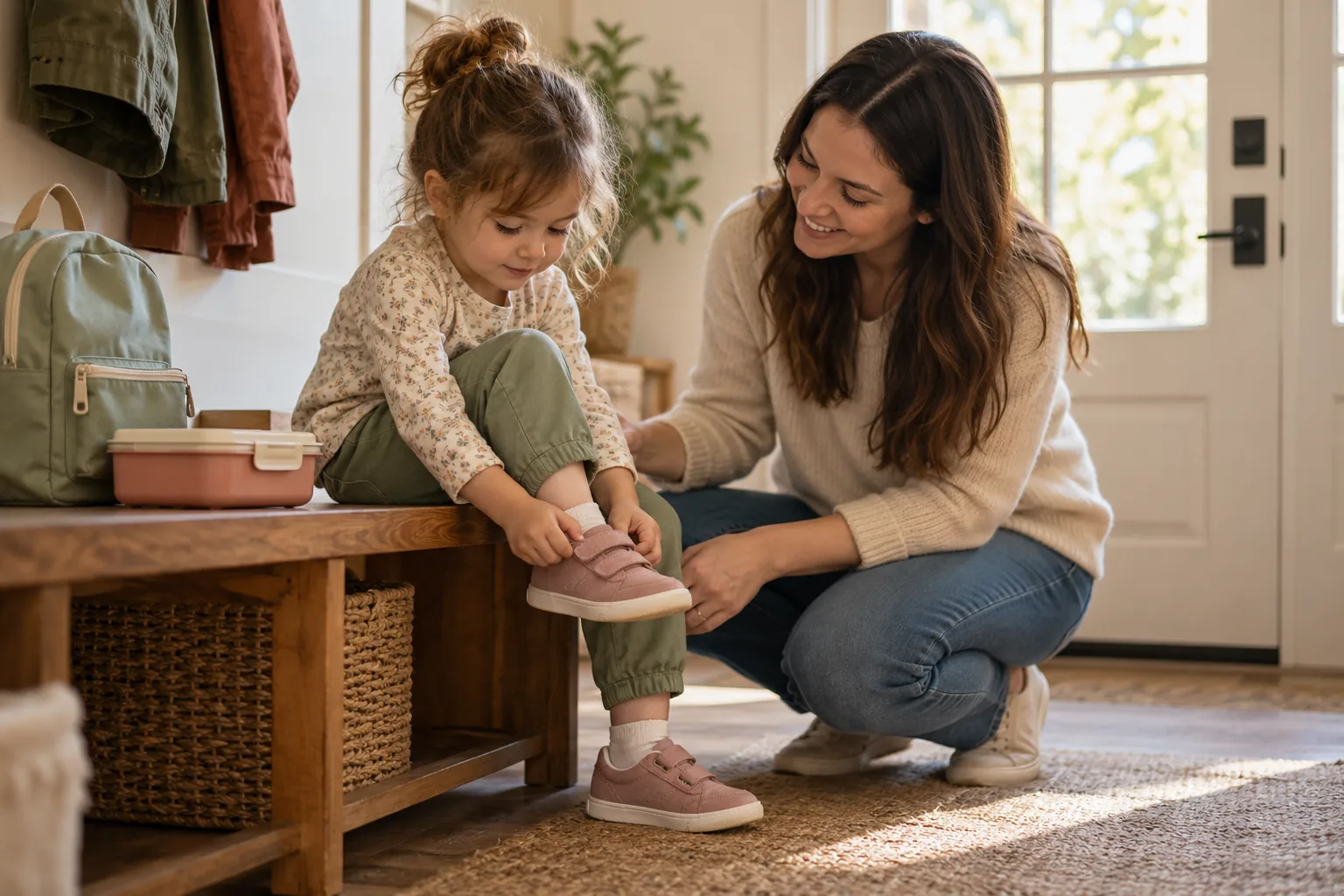
Kindergarten Readiness Checklist for Parents
Readiness isn't about reading early or counting to 100. This checklist covers the social and self-help skills that matter most — and how to build them gently.
By MUSKJan 9, 20265 min

Look at how your child handles everyday activities, then use this kindergarten readiness checklist to mark each skill as “Does this,” “Practicing,” or “Not yet.” The results can help you choose playful things to practice and start a conversation with a teacher. Kindergarten welcomes children who are still learning.
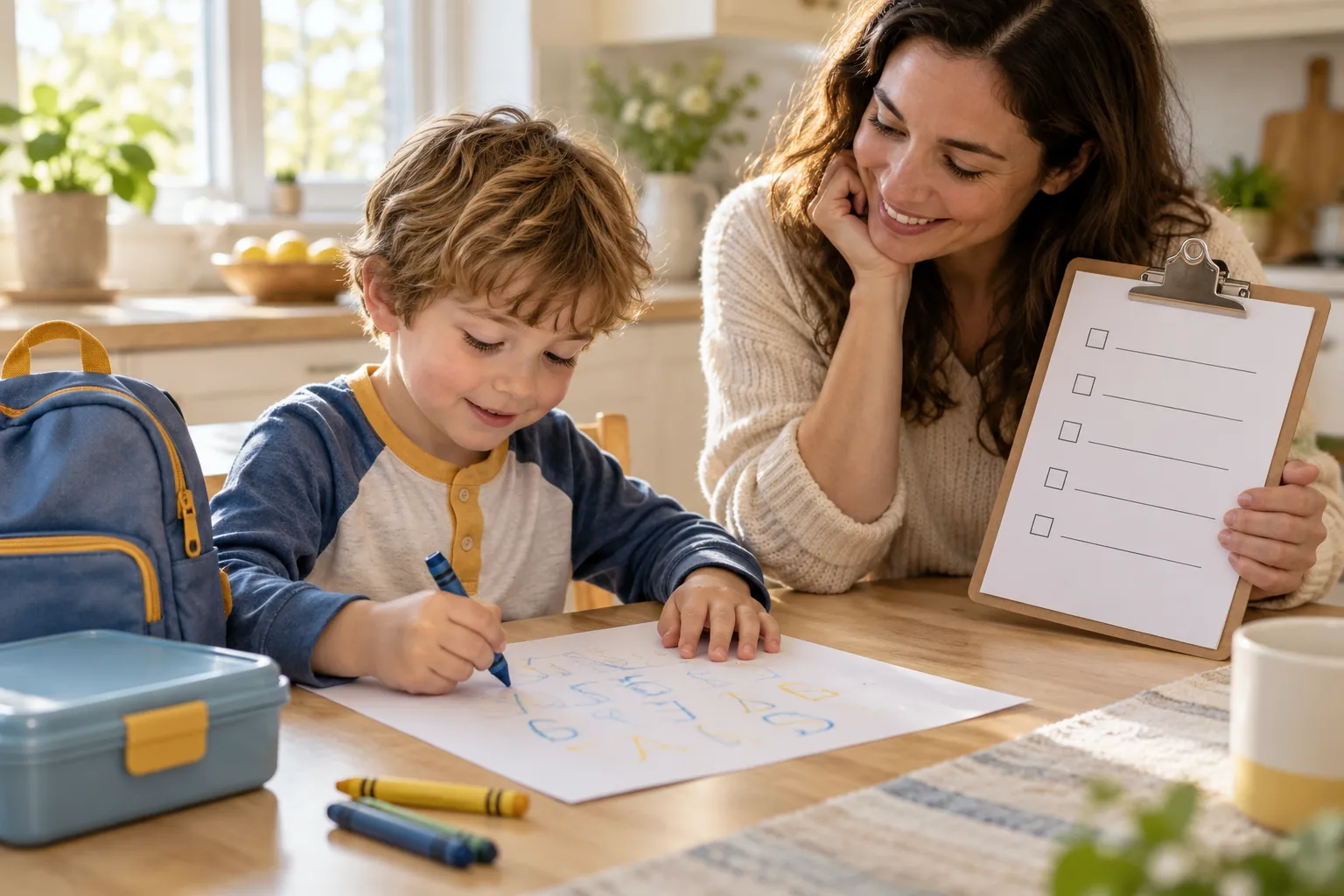
Not a test or screening. These are CDC milestones most children reach by 5 years. Kindergarten teachers expect a wide range of skills, and schools can provide accommodations. Talk with your child’s doctor about any concern. Nothing you mark is saved or sent.
Date: ____________ · 0 of 15 marked
Follows rules or takes turns when playing games with other children
Try: Play a simple group game and invite each child to take a turn.
Sings, dances or acts for you
Try: Put on a pretend show and invite your child to sing, dance, or act.
Does simple chores at home such as matching socks or clearing the table after eating
Try: Make matching socks a sorting game during laundry time.
Tells a story with at least two events
Try: Take turns telling what happened first and next in a pretend adventure.
Answers simple questions about a book or story after it is read or told
Try: After a story, ask your child what one character did.
Keeps a conversation going with more than three back-and-forth exchanges
Try: Pretend to run a store and take turns asking and answering questions.
Uses or recognizes simple rhymes
Try: Say a playful word and invite your child to find a rhyme.
Counts to 10
Try: Count toy pieces together as you put them into a box.
Names some numbers between 1 and 5 when pointed to
Try: Point to numbers in a counting game and invite your child to name them.
Uses words about time such as yesterday, tomorrow, morning or night
Try: Play pretend calendar and talk about yesterday, tomorrow, morning, and night.
Pays attention for 5 to 10 minutes during activities such as story time or making arts and crafts (screen time does not count)
Try: Read together or make a craft, letting your child choose what interests them.
Writes some letters in their name
Try: Offer crayons and invite your child to write letters from their name on pretend mail.
Names some letters when pointed to
Try: Point to letters in your child’s name during a letter-finding game.
Buttons some buttons
Try: Dress a doll or costume together and let your child try its buttons.
Hops on one foot
Try: Play a hopping game and invite your child to try one foot.
Mark a few skills to see what to practice through play.
Questions for the teacher: ____________________________________________
Kidowear · kidowear.xyz/tools/kindergarten-readiness-checklist · Milestones: CDC “Learn the Signs. Act Early.” (by 5 years). Not a developmental screening.
Think about what your child does during ordinary play, meals, dressing, and conversations. Mark each skill “Does this,” “Practicing,” or “Not yet” based on what you have seen. You can change an answer as your child grows or as you notice the skill in a different setting.
Use the summary to choose a few playful practice ideas that fit your day. A “Not yet” mark identifies something to explore together, not a failure. You do not need to work on every skill at once or turn practice into a lesson.
The printable copy gives you a simple way to share your observations with a preschool teacher or future kindergarten teacher. It can help you describe what your child enjoys and what they are working on. The tool stores nothing.
This kindergarten readiness checklist is not a test, score, screening, or admission requirement. It cannot decide whether a child is ready for kindergarten. Kindergarten is designed for children who are still learning these skills, and teachers expect a wide range.
The American Academy of Pediatrics describes school readiness across social, emotional, and behavioral skills; early language, literacy, and math; practical self-care; and physical skills. These areas include taking turns, following directions, talking and listening, noticing letters and numbers, using the toilet, playing, and holding a crayon.
The CDC’s “Learn the Signs. Act Early.” milestones describe skills most children reach by 5 years. They include taking turns in games, telling a story with at least two events, answering questions about a story, keeping a conversation going, recognizing rhymes, counting to 10, and naming some letters and numbers.
The CDC list also includes doing simple chores, using words about time, paying attention for 5 to 10 minutes during activities such as stories or crafts, writing some letters in a name, buttoning some buttons, and hopping on one foot. Singing, dancing, or acting for you is another listed milestone.
A checklist can make these broad areas easier to notice in daily life. A child might show a skill during play that you have not seen during a more structured activity. Use your answers as a snapshot of what you have observed, and leave room for skills that are still developing.
Start with an activity your child already likes. During a game, take turns and talk about its rules. During a story, invite your child to tell you what happened first and what happened next, or ask a simple question about what you read together.
Dressing offers a chance to try buttons without making getting ready feel like a drill. You can let your child explore a button on clothing during unhurried play. A pretend getting-ready game can also give your child room to try again.
At snack time, let your child try opening the packaging they usually use. You can make a counting game with snack pieces or ask your child to spot a number you point to. Keep the activity playful and follow your child’s interest.
Bathroom routines can be another place to practice practical self-care. Talk through the familiar steps together, then give your child a chance to do the parts they can manage. If a part is still difficult, note it on the checklist for a conversation with a teacher.
Songs, rhymes, drawing, and movement offer other ways to explore skills on the list. Sing together, look for words that rhyme, play with letters in your child’s name, or try hopping during an active game. A short, enjoyable activity is enough to make practice part of the day.
Share the kindergarten readiness checklist printable with your child’s preschool teacher if they have one. Ask which skills they have seen during play or group activities. Their observations may help you understand how your child approaches the same activity in a different setting.
You can also bring the printout when you speak with a future kindergarten teacher. Point to a few strengths and a few skills your child is practicing. Ask what classroom routines are like so you can talk about them with your child before school starts.
If your child has a disability, ask the school about accommodations that may support their participation. The checklist does not determine what support a child needs. Use it to help explain your observations and begin a conversation with the school.
Age eligibility rules vary by state and district, so check with your own district for its rules. A checklist cannot tell you whether your child meets those rules. Keep questions about enrollment separate from your notes about everyday skills.
If you have a concern about your child’s development, talk to your child’s doctor. You can describe what you have noticed and bring the printable checklist to help you remember examples. Include skills your child shows as well as skills you are wondering about.
The CDC says its milestones are not a substitute for a validated developmental screening. This checklist is not a screening either. Its answers reflect your observations and cannot explain why a skill is difficult or determine whether your child needs support.
You do not have to wait for every answer to become “Does this” before raising a concern. Tell the doctor what you see during ordinary activities, such as conversation, play, dressing, or story time. The conversation can focus on your child and the questions you have.
A teacher can share what they observe at school, while your child’s doctor can address developmental concerns. Keeping those conversations connected may help you describe the same skill across settings. The checklist is a starting point for discussion, not an assessment.
Make room for familiar routines around getting dressed, eating a snack, and using the bathroom. Invite your child to try the parts they are practicing, and offer help when they need it. These ordinary moments can show you which tasks feel comfortable and which ones need more practice.
If you can visit the school, use the visit to help your child see the place they will go. Talk together about what they notice. You can also ask the school about its day so your conversations at home reflect the routines your child will encounter.
Practice a simple drop-off goodbye during pretend play. Let your child play the caregiver or the student, and switch roles if they want to. This gives you a gentle way to talk about arriving at school and seeing each other again.
Keep using the checklist as a guide for conversations and play, not as a deadline. Your child can enter kindergarten while still practicing skills on the list. Share useful observations with the teacher, then let the classroom be a place where learning continues.
Numbers and lists in the tool come from these public pages, checked on October 20, 2026. The tool is a planning aid, not medical, developmental or fitting advice.
Spotted a wrong number? Tell us and read our editorial policy.
Readiness isn't about reading early or counting to 100. This checklist covers the social and self-help skills that matter most — and how to build them gently.
Separation distress is common in early childhood, and its timing varies. Plan a predictable goodbye, agree on caregiver support and notice when more help is needed.
Enter a child's foot length to compare US C/Y, UK, EU, and CM sizes using Nike's published kids shoe chart.
Open toolUse height and weight to find a starting US clothing size, from 2T-5T through 4-14, based on Carter's published chart.
Open toolChoose age-appropriate chores from the American Academy of Pediatrics list for ages 5-12, then print a weekly chart for your family.
Open tool